
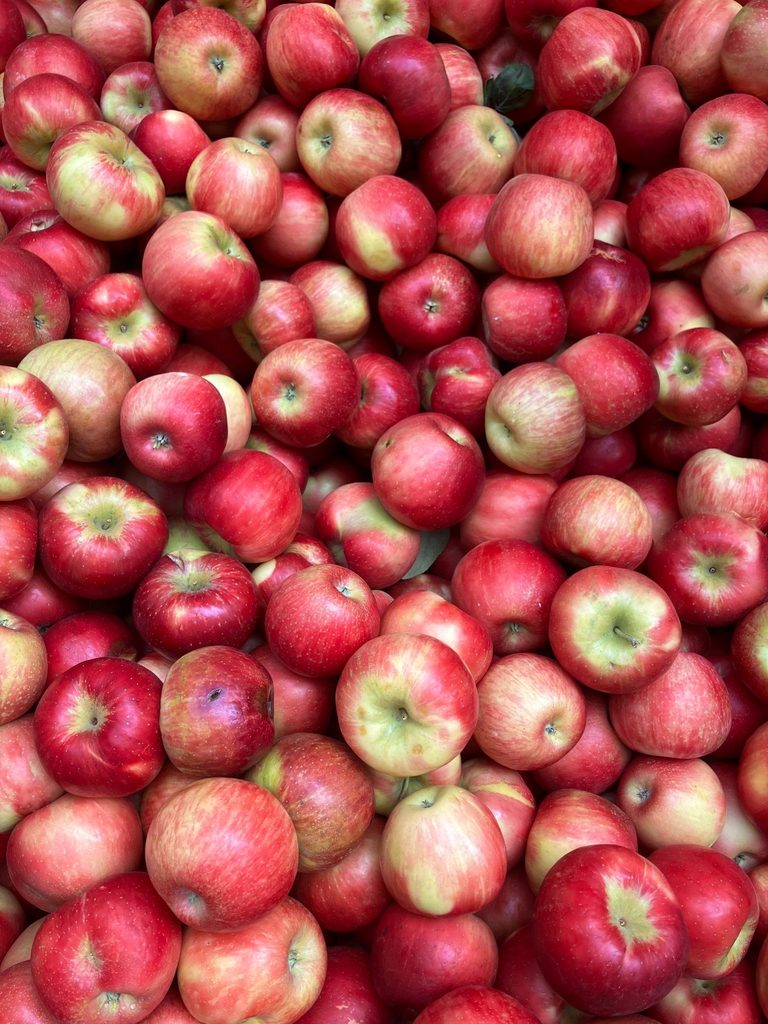
I’m sure all of us have had an experience where freshly cut fruit slowly turns into a brown unappealing mess. The gripe of having to eat browned fruit is a universal experience. The texture is grainy, slightly mushy, and the taste seems off. It just isn’t a great experience. But why does this happen, how does it affect the apple, and what are some ways to avoid it?
The process of an apple turning brown has a name: enzymatic browning. Only specific fruits that contain the enzyme polyphenol oxidase (PPO) as well as adequate antioxidants called phenolic compounds inside their cells can undergo enzymatic browning. When the fruit is cut open, the cells are broken, exposing the separated compounds to the air and each other creating an oxidation reaction. PPO speeds up the reaction, creating quinones. A quinone is a highly reactive molecule that likes to react with other quinones, leftover phenolic compounds, proteins, and amino acids. This creates a messy chain of cross-linked networks, or a polymer. Large amounts of production of this polymer, a messy, tangled web of molecules is what creates the uneven, dark, and almost dirt-like appearance of browning on apples.
What does this process do to my precious apples? The good news is that fruits and vegetables affected by enzymatic browning are no less safe to eat than fresh apples. In fact, much of the nutritional value in macronutrients such as fiber, potassium, and natural sugars remains in either case. The bad news is that browned apples are much less antioxidant-rich than fresh apples. The enzymatic browning directly consumes polyphenols and vitamin C which reduces the antioxidant content in the fruit.
So what are the best methods to keep apples at the highest nutritional value as well as keep them looking appetizing? The main methods are to block exposure to oxygen, inhibiting enzyme activity, or using antioxidants to stop the reaction. Adding citrus juice to lower the pH disables enzymes with excellent effectiveness, but alters the taste and eating experience of the apple. Another method to inhibit enzyme activity is to use a saltwater solution. The solution enables the sodium ions to temporarily inhibit the enzyme activity, with minimal impact on taste as long as apples are rinsed with fresh water before consumption. Alternatively, submersion in water, or any other barrier like caramel, honey, or peanut butter will act as a barrier against oxygen, maintaining the “freshness” of the apple. Interestingly, scientists have genetically engineered a special type of apple, the Arctic apple, that silences the production of PPO enzymes and is resistant to enzymatic browning due to the scarcity of the enzyme.
The browning of fruits and vegetables is not something to be afraid of. It’s a natural process that creates an interesting topic of investigation and new research in food science and gene editing. Next time fresh fruit is on the agenda, try some of these methods to maintain the appearance and nutritional value of those fruits!
Be First to Comment