
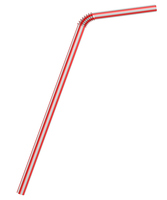
It seems like a simple question: does a straw have one hole or two? At first, the answer might seem obvious, but the more you think about it, the more confusing it gets. Does each opening count as its own hole, or are they simply two ends of the same one? What starts as a silly question can quickly turn into a surprisingly complicated debate. With convincing arguments on both sides, the answer might not be as straightforward as you think.
In this article, we discuss the following question:
Does a straw have one or two holes?
| A Straw Has Two Holes! | A Straw Only Has One Hole! |
| A straw has two distinct entry and exit points, and each end can be used independently. For example, a cup has one opening, but if you remove the bottom, it becomes similar to a straw, with two openings. A hole in the ground does not extend all the way through the Earth; it simply creates an indentation in the surface. This suggests that a hole does not necessarily have to pass through an entire object, so each opening of a straw can be considered a separate hole. The same reasoning applies to a pair of pants, where the waist and each leg are considered separate openings. Therefore, since a straw has two distinct openings, it should be considered to have two holes rather than one. | Rather than having two separate holes, a straw has one continuous hole connecting both ends. Both ends of the straw lead to the same continuous space, meaning they are two openings of a single hole. For example, a washer is generally considered to have one hole. If you gradually stretch and narrow the washer until it resembles a straw, the number of holes does not change simply because of its length. Therefore, a straw should be considered to have one continuous hole rather than two separate holes. |
Be First to Comment