
Whenever a friend visits Ithaca, there’s always one thing I have to show them: a gorge. It’s the most quintessential Ithaca experience. Over time, I’ve built up a mental list of favorite parks—but the only way I can really describe them to newcomers is through my own invention: the “walking-to-waterfall ratio.”
The goal of nearly every gorge hike is the same: to reach a waterfall. The “walking-to-waterfall ratio” simply measures how long it takes to reach that payoff. And with cold weather settling in and trail closures around the corner, now might be your last chance to enjoy these waterfalls in their full autumn glory before winter puts them on pause until spring.
Low Walking-to-Waterfall Ratio
A low walking-to-waterfall ratio means you don’t have to walk far to see a waterfall—or even better, you walk alongside one. The best example is the Buttermilk Falls State Park Gorge Trail, where you follow Buttermilk Creek right up the waterfall’s edge.
Despite the name, “low ratio” doesn’t mean “low effort.” These hikes often involve steep inclines and countless stairs. Since you’re trekking directly beside the gorge, the path can be challenging—but also incredibly rewarding. You’ll find yourself surrounded by rushing water, natural stone walls, and cascades at nearly every turn. The payoff isn’t just in the view; it’s in the experience of walking through the waterfall’s world.
Another great example is the Cascadilla Gorge Trail. Like Buttermilk, it’s stair-heavy but worth every step as you wind along the creek’s twists and turns.
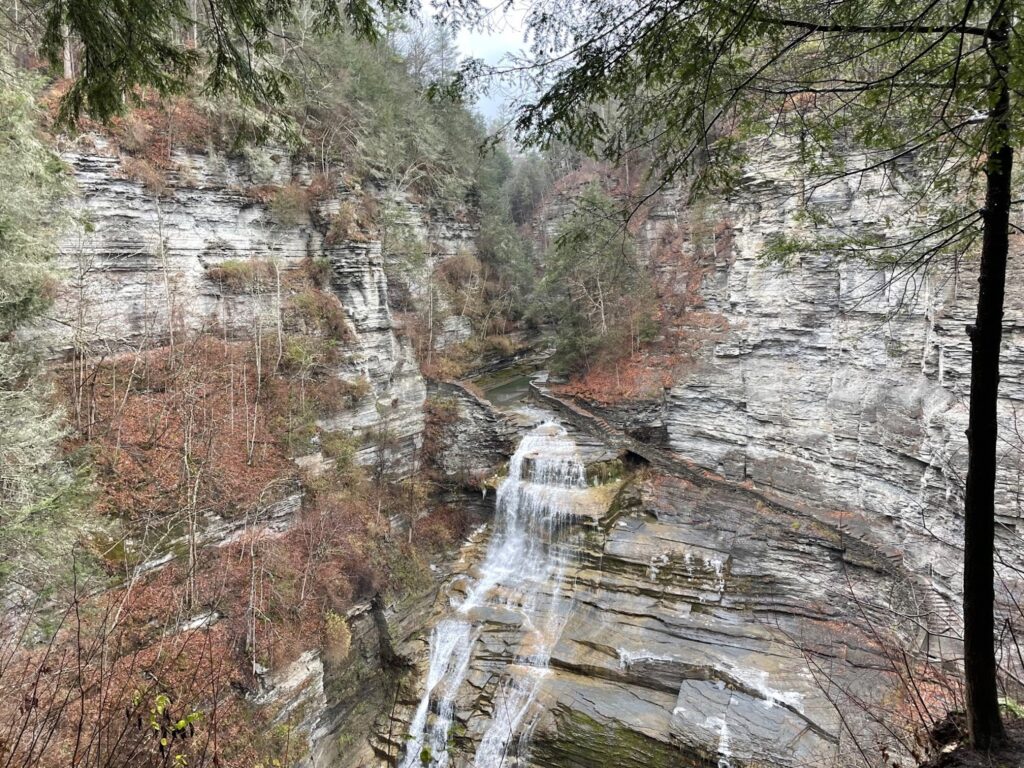
If you prefer fewer stairs but still want to feel immersed, head to the Upper Entrance of Robert H. Treman State Park. From there, you can hike down to Lucifer Falls and admire it from the cliff’s edge—no steep ascent required.
One drawback of low-ratio trails is that their proximity to the waterfalls creates potentially dangerous, icy conditions in colder weather, meaning that many of them close for the winter. So make the most of them while they’re open, or you might have to wait until spring for another go.
High Walking-to-Waterfall Ratio
A high walking-to-waterfall ratio means the waterfall is your grand finale. These trails take longer to reach the falls, but the reward is a full, dramatic view from below.
The classic example is the Taughannock Gorge Trail. You’ll walk about a mile from the trailhead before reaching the waterfall. While that’s not an especially long hike, the ratio is high because the entire walk leads to one spectacular view.
High-ratio hikes are often more accessible, with gentler gradients and smoother paths. I usually take first-time visitors on these trails—they’re less intense but still offer unforgettable views. Another example is hiking to Lucifer Falls from the lower entrance of Treman State Park, which involves a long, scenic trek through the woods before you reach the overlook.
You can also find high-ratio experiences on Ithaca’s recreational trails, like the Black Diamond Trail or Six Mile Creek Natural Area, where you can pass by multiple gorges and waterfalls during a leisurely walk.
The In-Betweens
Not every trail fits neatly into this system. Many parks have rim trails that run above the gorge, offering aerial views rather than immersive ones. Rim trails at Buttermilk or Taughannock, for instance, involve steep climbs but reward you with panoramic views. I usually exclude these from my ratio—they vary too much in difficulty and experience—but they’re wonderful alternatives when the gorge trails close for the season. Everyone has their own preferences when it comes to hiking. For me, the “walking-to-waterfall ratio” helps explain why I love certain trails more than others—it’s about how deeply you get to experience the waterfall itself. Whether you like to walk to a waterfall or with one, Ithaca has a gorge for you.