

Author’s Note: contains spoilers.
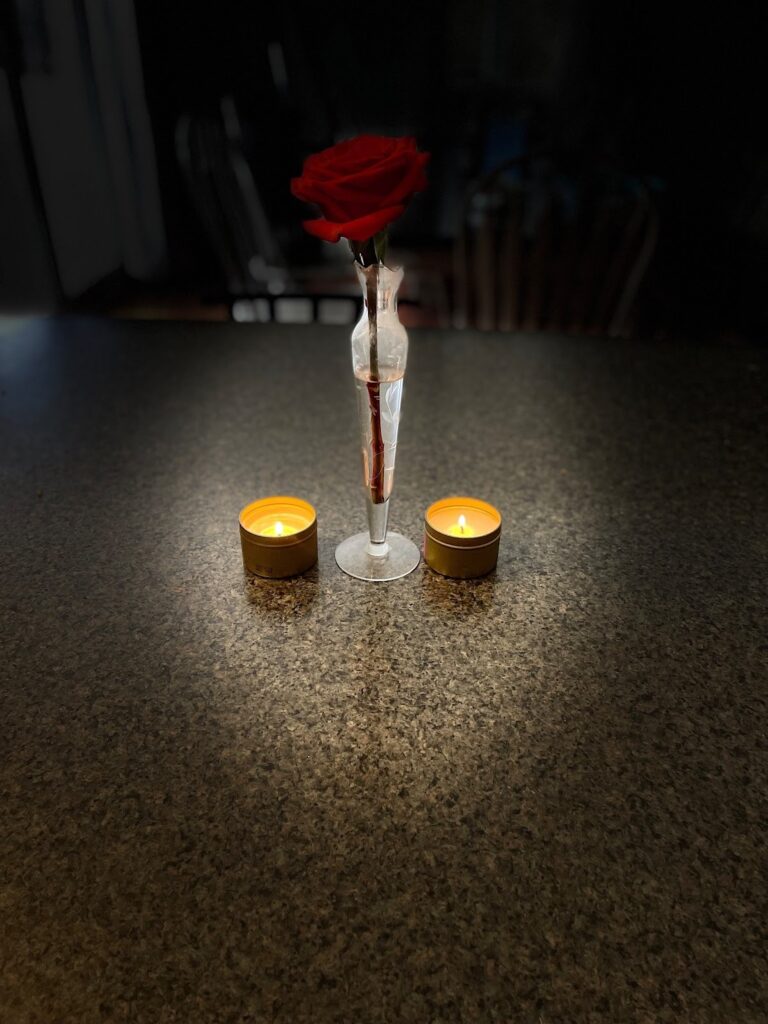
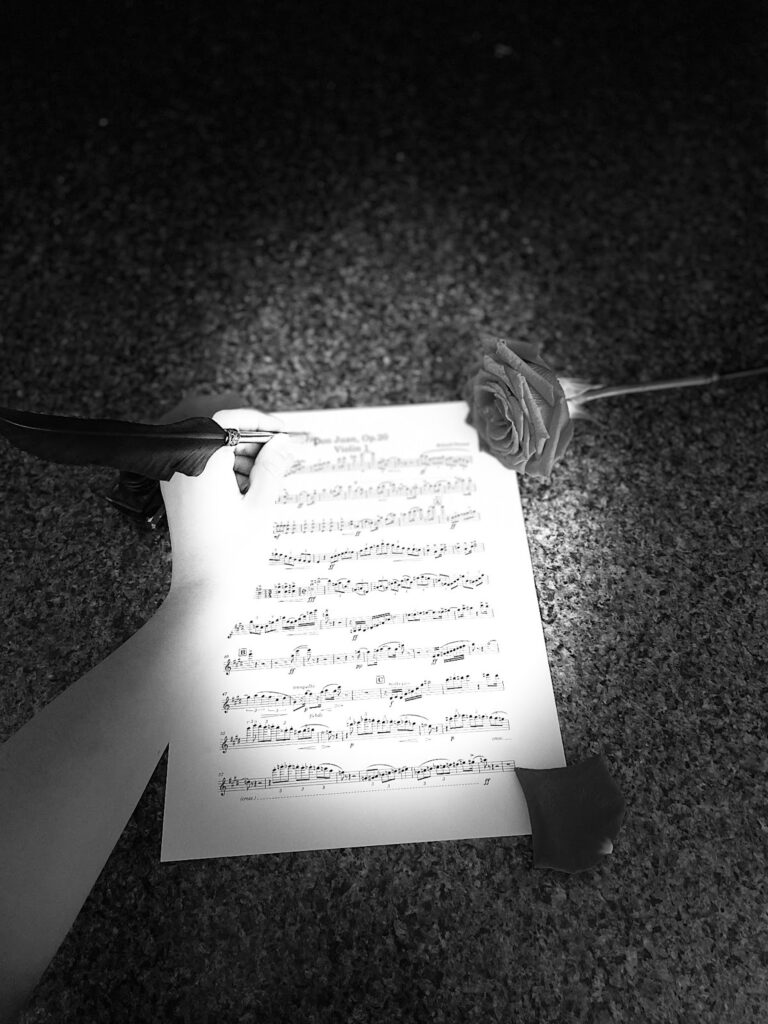
A red rose; love. A white mask; fear. A beautiful voice; longing. The Phantom of the Opera is a haunting and thrilling tale about the dangerous powers of love and learning to let go. Movie fanatics who enjoy a side of macabre with their hot cocoa will be enraptured by this film.
Originally a book written by Gaston Leroux in 1910, the musical was first premiered in 1986 at His Majesty’s Theatre in London. It has become the longest-running show on Broadway. The Phantom of the Opera has also been adapted into a movie released in 2004, starring Emmy Rossum, Gerard Butler, and Patrick Wilson. Andrew Lloyd Webber’s classical orchestral genius combines with modern music elements in the film to create an interesting medley.
Christine Daaé (Emmy Rossum), daughter of famous violinist Gustave Daaé, is a young and promising dancer and chorus girl employed at the Paris Opera House in 1870 under the tutelage of ballet instructor Madame Giry. Orphaned at age eight after her father’s death, Christine has lived with Madame Giry for the better half of her life. Unbeknownst to all except Madame Giry, Christine has been taking voice lessons from a mysterious entity through the walls of the Opera House, and she is convinced it is the Angel of Music her father sent to watch over her. Christine’s ethereal voice is soon discovered by the new owners of the Opera House, Richard Firmin and Gilles Andrés, and she is cast into a more prominent role. During the performance, Christine sings a chillingly beautiful rendition of “Think of Me,” which prompts wealthy patron Viscount Raoul de Changy, an old love interest, to recognize Christine. The two soon reunite and rekindle their past love, but not before Christine is mesmerized by her Angel of Music, who, we will learn, is in fact the “Phantom of the Opera” who dwells in the basement below the Paris Opera House.
After Christine’s successful performance, the Phantom makes his first physical appearance, notably wearing a white mask that covers half of his face. He takes advantage of Christine’s blind trust in the false belief that he was sent by her father to watch over her to lure her into his lair. Christine and the Phantom descend to the basement with “The Phantom of the Opera” (this is a song in the movie, not just the title of the film) playing, ominously foreboding the complexities of their relationship.
“In sleep he sang to me, in dreams he came
That voice which calls to me and speaks my name
And do I dream again? For now I find
The Phantom of the Opera is there inside my mind
Sing once again with me, our strange duet
My power over you grows stronger yet”’
- “Phantom of the Opera”, Andrew Lloyd Webber and Charles Hart
Upon entering the Phantom’s basement, Christine is overcome by the Phantom’s musical genius but also deeply disturbed by his obsession with her that has grown stronger and stronger over the years. Christine gently removes the white mask from the Phantom’s face, curious as to what he is hiding, and provokes the wrath of this tortured soul. As she peels the mask away from his face, we see the reason for his isolation and loneliness, which drives him mad. Having been born with a severe facial deformity, the Phantom was the object of disgust, morbid fascination, and emotional and physical abuse ever since he was a child. His life, so tragically devoid of any love and compassion, was given purpose when he began to anonymously teach Christine through the Opera House walls. Her lack of reciprocation of love to the Phantom is met with heavy resentment and violence on his end, as the Phantom abducts Raoul, Christine’s true love.
Tensions rise in the climax of this movie when the Phantom issues an ultimatum to Christine: either live the rest of her life as his wife or escape and allow the Phantom to kill Raoul. Christine’s love for Raoul overcomes her, and she commits herself to a life with the Phantom so that Raoul can live. In the midst of the Phantom’s twisted joy, he realizes that if he truly cared for Christine, he would allow her to live happily with Raoul. He finds it in his heart, or what is left of it, to release them. Even after all his cruelty, Christine’s deep capacity for love allows her to take pity upon the Phantom for the tragic circumstances that have hardened his heart. For the first time in his life, he is shown compassion by this gentle and empathetic spirit. She does not turn away from his physical deformity, but rather his cruel actions, saying, “It’s in your soul that the true distortion lies.”
Years later, the Phantom’s love burns just as strongly for Christine even after she is settled in her grave. His obsession that overshadowed anything he knew was right transformed into a love so deep that he learned how to let her go.
Rani, your opening imagery—the red rose, white mask, and beautiful voice—perfectly captures the story’s core tension. I particularly appreciate how you frame it as a tale about the “dangerous powers of love.” Which specific directorial choice do you think best amplified that sense of macabre danger?