
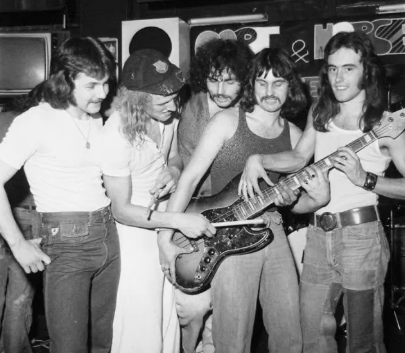
It was the late 1970s in Britain. The economy was collapsing. There were few jobs due to the de-industrialization of the workforce. Before the 1970s, people had relied on factories to work. Without jobs, the unemployment rate was at an all-time high. It seemed there was no future. But some young kids from Britain found an escape—through a magical genre of music called “heavy metal.”
The new wave of British heavy metal (NWOBHM) was a movement from Britain in the late 1970s and early 1980s. In a land that seemed to be robbed of any future, a group of people banded together and started something that would still resonate throughout time. Groups like Iron Maiden, Saxon, and Raven combined the loud riffs and soaring vocals of early 1970s hard rock and the sneering speed and DIY ethos of punk to create something totally unprecedented. It was loud, fast, and uncompromising. And its impact was even bigger. All of a sudden, after years seemingly devoid of any hard and heavy music, metal was cool again. Bands like Motorhead were seen on popular TV programs like “Top of the Pops.” Iron Maiden and Def Leppard were being played on the radio. This was unexpected, as in the mid-1970s, disco and punk usurped rock as the top music genre. Instead of music being something only for those who have the privilege and the means to play, music became something for all. Anyone had the opportunity to become the next big thing, and maybe, just maybe, make it big.
It has been forty-five years since 1981, the year the NWOBHM peaked with records like Motorhead’s No Sleep till Hammersmith, Diamond Head’s Borrowed Time, Saxon’s Denim and Leather, Iron Maiden’s Killers, and Judas Priest’s Point of Entry. While somewhat relatively unknown, this movement still matters in today’s musical landscape. We live in an era of corporate music and the looming threat of artificial intelligence, where music is pumped out by corporations with no innovation, just the same Top 40 plastic. The NWOBHM stands as a bastion of the creativity of the human spirit. Instead of following what was popular, these bands and their fans followed their own dreams. This is something we need in today’s world.
After the scene peaked in 1981, it quickly fell into decline. The bands found themselves outgunned by the rise of metal in America. The rise of MTV and glam metal groups like Poison caused those groups to outshine the NWOBHM groups. The scene slowly just died away. But the music and the message still live on in our hearts and minds.
“There were sixty thousand there and just like thunder the crowds began to roar…
And the bands played on…”- Saxon, And the Bands Played On
NWOBHM Playlist:
Looking to get into classic British metal? Here are some classic cuts to get you started:
“Motorcycle Man” by Saxon
“Running Free” Iron Maiden
“Overkill” by Motorhead
“For the Future” by Raven
“Helpless” by Diamond Head
“Children of the Earth” by Praying Mantis
“Name, Rank, and Serial Number” by Fist
“Insanity” by Tygers of Pan Tang
“Shellshock” by Tank
“Killing Time” by Sweet Savage
“Let it Loose” by Savage
Be First to Comment