
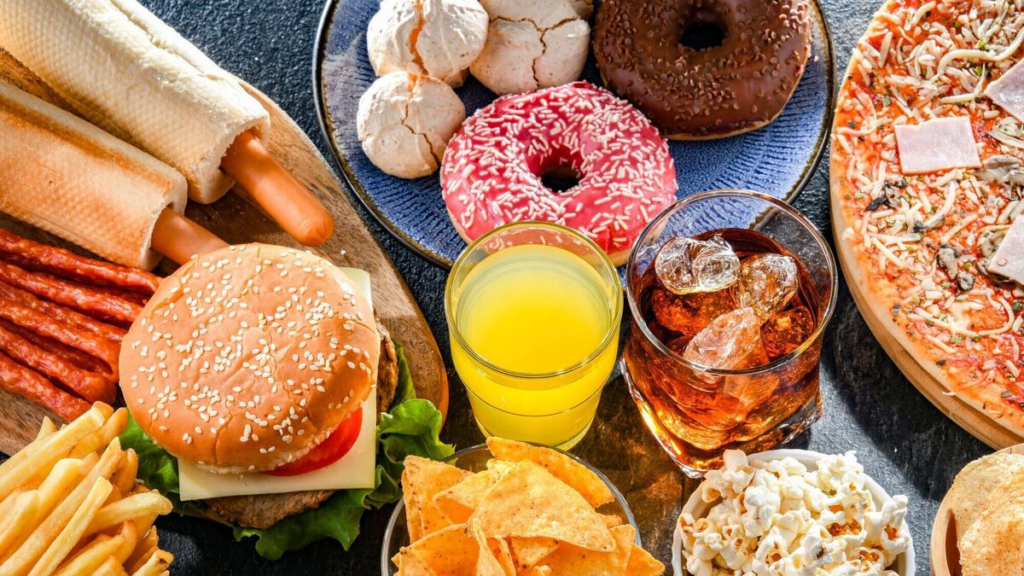
Eating junk food has long been considered a middle ground between health and a standard activity. But it’s time to reconsider the moniker of junk food itself. Nearly all manufactured, packaged food shouldn’t be considered food, and perhaps classified as an addictive substance. The corporations manufacturing those very foods don’t see it that way. They see a pretty penny to be made, and they’ll chase it to the detriment of everybody else. For instance, Nestlé markets their nutritional food to Brazil, but what they’re really selling is ultra-processed food (UPF). UPF is the scientific designation of junk food, and although it is complicated and nuanced, one thing about it isn’t—UPF is dangerous. Although Chris van Tulleken’s 393-page book, Ultra-Processed People, was written about this in 2023, this article will take a more straightforward route by exploring the danger of UPF through the molecule nearly ubiquitous in all UPF: sugar.
Sugar is sometimes known as the most dangerous molecule to ever exist. Although excess sugar is linked to serious health issues, it’s not quite as bad as you’d think. Some modern human societies eat copious amounts of sugar in the form of honey. For instance, according to Ultra-Processed People, the Mbuti community of the Congo get up to eighty percent of their calories from honey in the rainy season, yet there are no reports of widespread obesity there. Chemically, honey is nearly identical to high fructose corn syrup, both a mixture of glucose and fructose in varying ratios, and table sugar, crystallised pairs of glucose and fructose molecules. Still, excess sugar consumption is linked to a host of detrimental health effects. According to a study published in 2014 in JAMA (Journal of the American Medical Association) Internal Medicine titled “Added Sugar Intake and Cardiovascular Diseases Mortality Among US Adults,” high sugar intake was related to a greater risk in heart disease, as well as higher blood pressure, inflammation, weight gain, diabetes, and fatty liver disease. Moreover, sugar makes you eat more food by driving an addictive response in your brain.
For some anecdotal evidence you can test by yourself, you’ll need two bowls, mostly unsweetened cereal, milk, sugar, and somebody who will eat it. Add equal amounts of cereal to each bowl, but in one, remove a spoonful of cereal and replace it with a spoonful of sugar. Pour the milk in and eat both bowls of cereal. You’ll probably find that you ate the whole sugar-sweetened bowl and remained hungry afterwards, while both could be untrue for the normal bowl of cereal.
A formal study from 2018 showed how this works. Hyperpalatable food, which can be either ultra-processed or made by a skilled chef, is a mix of different foods that are more appealing together. One such example is sugar and fat, one of the most common hyperpalatable combinations in UPF. Foods like this have been found to stimulate changes in the same brain circuits as those affected by traditionally addictive drugs by triggering a “wanting” system.
The wanting system developed to get us what we want by remembering things we’ve had a pleasurable experience with in the past, such as a berry that tasted good or a person we had fun with, so that we will return to them later. Since sugar is a pleasurable experience for us to eat, food with lots of sugar triggers those very brain circuits closely related to the ones associated with addiction to other more traditionally addictive substances. In addition, sugar is often associated with nutrient-rich fruit or energy-dense honey. This made our bodies see sugar as a benefit as it always accompanied necessary nourishment. However, the artificially added sugar in UPF comes with all the addictive elements and none of the nutritional benefits, which is why the added sugar in the bowl of cereal made you eat more and didn’t fill you up.
Our bodies need to absorb more than just calories to feel full. Only after getting all of the minerals, vitamins, and nutrients we need do we consider ourselves full, and eating UPF prevents that from happening. Even when they are artificially added back to the UPF, it is often useless or even detrimental. The ultra-processing of food makes it pre-digested, which leads to decreased energy absorption in the gut. UPF moves through your stomach so quickly that it has no time to absorb the nutrients, if they are present at all. Eating UPF also spikes blood sugar and triggers insulin to flood the blood in excess levels in relation to glucose levels, a condition called hyperinsulinaemia. Research has shown that hyperinsulinaemia can lead to alterations in carbohydrate absorption, making us absorb less energy. Finally, the increase in free sugars, total and saturated fats in UPF competes with nutrients and vitamins to be absorbed in the gut. In fact, according to the National Library of Medicine, the more UPF you eat, the less nutrients your body absorbs. Although you are getting the necessary calories and sugar, the minerals, vitamins, and nutrients that your body needs to function and feel sated are no longer present, leading to undernutrition as well as obesity.
Now, although added sugar is present in nearly all UPF, one prominent and dangerous example is Coca-Cola. Coca-Cola might be considered an incredibly addictive substance, combining all of these concepts and more to do so. To drive the sugar-addiction mentioned previously, Coca-Cola sneaks in thirty-nine grams of sugar into a single twelve-ounce can of soda by masking it beneath bitter caffeine and extremely sour phosphoric acid. The fact that Coca-Cola is fizzy, served ice-cold, and a liquid, makes it easier to consume and, for reasons unknown, masks sweetness. Coca-Cola is a prime example of a dangerous UPF because it packs so much addictive sugar in the most digestible form, liquid, while masking it more still with other flavors and textures. This trend can be seen in most UPF. It is all really, really soft. Chips, candy and cereals disintegrate into a slimy mucus after a few seconds in the mouth no matter the starting consistency, easily digestible and leaving you hungry for another one.
Until recently, Nestlé had sponsored a river barge in Brazil’s Amazon region as part of a marketing push into Brazil. It acted as a floating supermarket as well as the headquarters for Nestlé’s “reselling ladies,” who go door-to-door selling Nestlé products. If this sounds very invasive, it is. The rationale to justify it was by presenting the program as a way to get affordable food to Brazil’s disadvantaged communities. Nestle gave its customers a month of pay for their purchases. Of the eight-hundred Nestle products available for purchase, among many dubiously healthy foods like Molico, a low-fat yogurt with just six grams of sugar, the most popular products are Kit-Kats and high-sugar yogurts and puddings with seventeen to twenty grams of sugar per 3.5 ounces. Barry Popkin, professor of nutrition at the University of North Carolina, says, “…they [Nestlé] are going into the backwoods of Brazil and selling their candy.” According to official health data released this week from Agência Brasil, 62.6 percent of the population had obesity in 2024. In 2023, 12.2 percent of children under the age of twelve lived with obesity.
All of Nestlé’s food can be classified as UPF, which we’ve just established as a dangerous addictive substance. Although this specific story is in the past, Nestlé and other major UPF corporations continue in similar activities. Fast-food companies and convenience stores are mostly found in poorer areas, having cheaper prices than healthy food.
In fact, in 2006, Brazil recognized all of these dangers and proposed a marketing ban on fast-food companies similar to those on tobacco. They would prevent brands like Pepsi and KFC from sponsoring sports and cultural events, as well as force them to include advertising alerts to warn consumers about foods high in sugar, salt and saturated fats in addition to adding marketing restrictions on advertising UPF and beverages towards children. According to The New York Times article “How Big Business Got Brazil Hooked on Junk Food” by Andrew Jacobs and Matt Richtel, industry-funded executives and backroom political maneuvering shot down the proposal. Food companies placed executives from Nestlé and Unilever on the board of vice presidents for the Brazilian Association of Food Industries. Industry-financed academics went on TV to declare the proposed regulations as an eminent economic disaster, while others wrote editorial pieces in newspapers suggesting stricter parenting and exercise would be more effective than regulations on food in culling the obesity crisis. Their most strident argument across the board was declaring the advertising restrictions censorship, especially resonant in a country recovering from nearly decades of military dictatorship. In 2010, most of the proposed restrictions were withdrawn, and intense lawsuits from biscuit manufacturers and an alliance of chocolate, cocoa and candy companies have frozen the regulations since then.
Is junk food really food anymore? Or is it simply an addictive substance marketed to us to the point of desensitization? Ultra-processed food is dangerous for so many reasons, but the most glaringly obvious one is right in front of us: the food corporations marketing dangerously addictive sugar for cheap.
Be First to Comment