
strong. Oren Milder
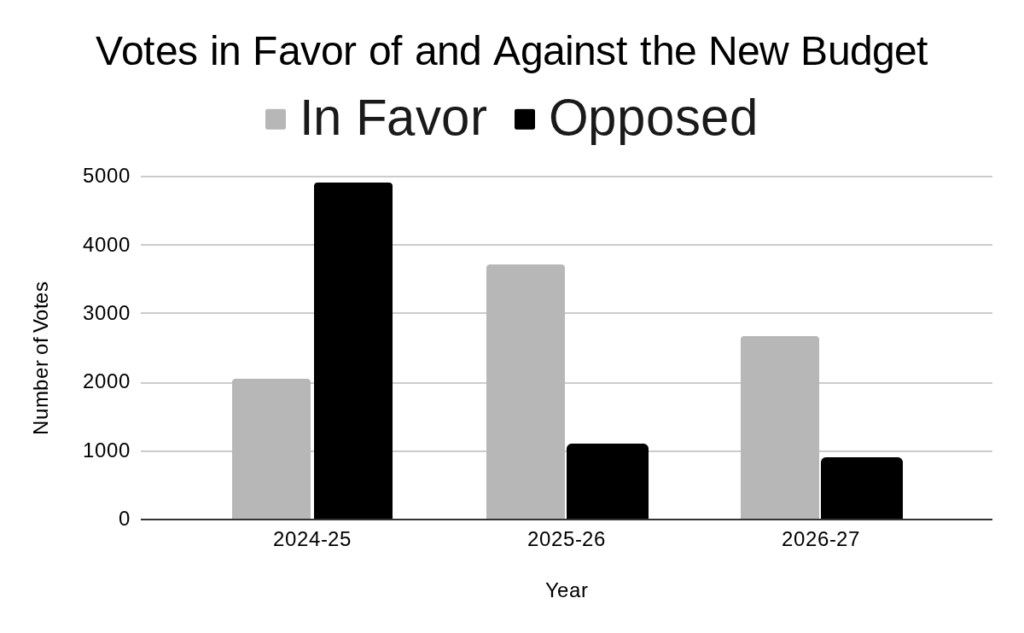
On May 19, voters overwhelmingly voted to approve the school district budget proposed by the ICSD Board of Education (BoE). As shown in the chart above, seventy-five percent of the 3,548 total voters voted in favor of this budget. Perhaps because this year’s budget was less controversial than in recent years, there was less voter turnout this year.
This year’s budget had some notable differences compared to budgets from previous years. In total, the new budget entails about five percent more total spending, including a roughly 6 percent increase in spending for salaries. Interestingly, there was only a 1.54 percent increase in spending for employee benefits, which is well below the current inflation rate of approximately 3.8 percent. Some percentage changes may seem big, but only represent a small change in expenditures. For example, there was an over fifty percent drop in the amount of spending for elementary school teacher assistants in the new budget compared to the previous one, but this is only an approximately 100 thousand dollar change.
The majority of the money for ICSD’s budget will come from property taxes, while about twenty-four percent of it will come from New York State. State funding this year represents one percent more of the budget than last year. Still, to fund the increase in this year’s budget compared to last year’s, property taxes will be 3.4 percent higher.
In addition to the budget, several other propositions related to district finances were voted upon on the same ballot as the budget—all of which passed. The first of these authorizes the BoE to spend up to approximately two million dollars of capital reserve funds on new energy-efficient buses and repairs for damage to Cayuga Heights Elementary School. The second allows the BoE to create a new capital reserve fund for the coming school year, which would hold up to ten million dollars and last for up to five years. The third funds long-term infrastructure costs using bonds.
By overwhelmingly adopting the budget, voters avoided what happened two years ago when the proposed budget was rejected by voters. Voters ended up accepting a pared-down budget with significantly lowered total spending. Ultimately, this led to educational programs, including Mandarin and Latin classes, being cut.