
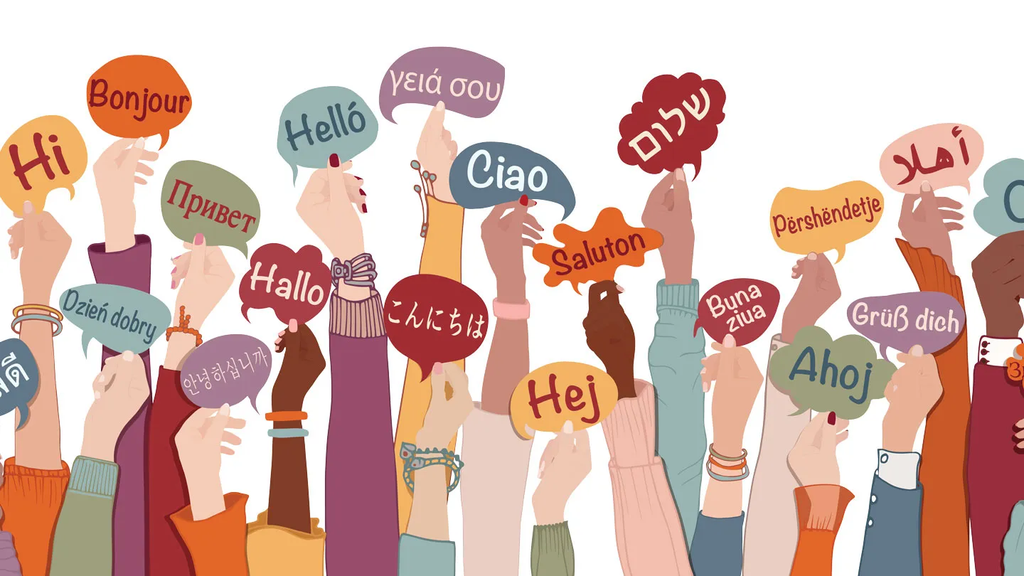
If you are reading this article, I’m happy, because you are likely wanting to learn a new language. Learning a language is extremely important and valuable, enabling you to make connections with different people and learn about a new culture on the way.
Now, your next goal is to keep that motivation going. According to YouTube channel Rise Above Reality, more than half of language learners quit after their first few months. Is it because the language is very hard? Usually, that’s not the reason. I believe any language can be learned to proficiency by anyone, no matter their native tongue. It’s because that person is using only conventional methods to learn a language, which won’t get you far.
Learning a language is not as simple as flashcards, grammar drills, or burying your face in a textbook. There’s more. As someone who studies Korean, Mandarin, and Spanish myself, I came up with seven secrets to language-learning that many learners miss.
Let’s dive into some unconventional language-learning methods that will help you language-wise, mindset-wise, and in your overall language-learning journey.
1. It’s Never Too Late to Learn
Yes, linguistics confirms that little kids learn language better than older people. That’s how you learned English early on, right? But that doesn’t mean once you pass a certain age, learning a language is impossible. I have seen many people eighteen or older on YouTube learn a language and speak it fluently. No matter what age you are, learning a language is always important and doable, and there should never be anything stopping you from trying to reach the throne of fluency, connection, and memories—a place everyone should desire to sit on. No matter your age, once you’re past early childhood, though, you will need something very important when you first encounter your new language.
2. Foundation First
That very important thing is to build the foundation for your language-learning journey. This is where the conventional methods of language learning take shape. Do textbook drills, flashcards, and other conventional methods to build the basic grammar rules and a base set of vocabulary. There is simply not much more you can do when you first start learning a language; you need to build a foundation with traditional methods. You can’t acquire, immerse, or connect without a foundation.
Once you feel comfortable with your foundation, which should consist of maybe a few hundred frequently used words and basic grammar rules, start thinking less ordinary and more extraordinary—like following this next secret.
3. Don’t Fancy Flashcards for Your Life
Yes, we all know about flashcards. No matter the language, when you tell somebody you want to learn vocabulary, they’ll suggest flashcards. Memorize those words, start a new set, and rinse and repeat.
Flashcards are not as simple as many people believe. Looking at words won’t automatically make you memorize the words. In fact, you won’t be able to recall many of them because the words tend to stay stuck in the flashcards, so the more flashcards you make, the less you can actually remember.
Flashcards can be a great tool only if used appropriately. First, they should contain only a few words per set, and after reviewing, try to reinforce those words in a different manner, like making sentences with them. This makes flashcards an effective tool to rely on when learning languages. But sometimes, memorizing is not the whole game.
4. Don’t Just Memorize Vocabulary, Acquire Too
If you play a piece of music so many times and build a personal connection with it, it might stay in your memory for years without you even realizing it. However, when you try to memorize words in a foreign language, you keep forgetting them, even after reviewing them so many times. The reason is simple: Music gives you pleasure. Memorizing words in a different language with traditional methods doesn’t exactly yield that pleasure.
Your brain will only remember something if it can be associated with pleasure. So, what do you need to do? You need to learn vocabulary in a way that gives you pleasure. So pull out a trick from your hat—immersion. Sometimes, the best way to study… is to not study! Watch YouTube videos and movies, listen to podcasts, switch your phone and apps to it, or even think in your new language. If you can, travel to a country that speaks your language and force yourself to be immersed.
It can be better to encounter one word unexpectedly in a YouTube video rather than memorizing thirty set words at your desk.That’s because when you acquire a new word in a new language, you remember the pleasure of learning it, which aids memory.
Now, make no mistake; memorization and acquisition are interdependent. You will need memorization to make progress in your new language. But sometimes, whatever method you use, some words may click with you instantly, while some words take days to review and understand. Which leads me to my next point.
5. Vocabulary Varies
Many believe that learning vocabulary is simple: just review a set of flashcards, which supposedly automatically enters words into your memory, do another set, and rinse and repeat. Unfortunately, learning a language is not that simple.
When you memorize or acquire words to learn by immersion, the time it takes to pick up a word varies. While learning Korean, I acquired some words at first sight, no review needed. Other words failed to reach my memory even after reviewing them numerous times.
This can’t quite be controlled. The best advice I would give to possibly beat this system is to learn words about topics you are interested in. Do you like sports? Learn vocabulary about your favorite ones before others. Like fashion? Learn words related to clothing first. What about music? Learn that too. Prioritize words you want to learn. It may aid faster memorization. But even that method won’t guarantee an instant pickup of words.
Due to this inconsistency in duration for words to reach one’s memory, it is hard to learn many words in a day. Intense studying, thus, is not an effective method, as seen in the next secret.
6. Consistency Over Intensity
When people go into language learning, they start the first day with pages of grammar drills, textbook exercises, and flashcards, going at it for hours. But then they get burnt out and don’t touch the language for a few weeks. By the time they’re back to studying, they hardly remember anything from that rigorous study session.
When it comes to language learning, drop the intensity. Consistency is what you need to learn a language effectively. Expose yourself to your language every day, no excuses. Do a little bit of textbook work or flashcards, listen to a podcast, or even watch a YouTube video for a few minutes in your target language. Although you won’t be doing much every day, concepts and words will slowly get into your brain, setting you up for more effective learning. Always choose slow and consistent progress over sporadic progress when learning a new language.
7. Learn Leniently
I have to admit, my Mandarin speaking isn’t that great. The tones come out wrong and my pronunciation gets rough. However, I’m still happily learning without stress even though it’s not at the level I want to be. Why? Because no one told me to study it. It’s not like I would have a rigorous exam about the material in my textbook the next day. I can learn at my own pace. And that is a jewel in the world of language-learning, not just because of instinct; it is backed by psychology.
A linguist on YouTube, Canto to Mando, talked about how psychologically important it is to learn a language with ease. Think of your brain as two boxes: box one and box two. Box one contains everything that you desire to know. Usually, the things you feel pressured to learn but aren’t interested in remembering end up in box one. This is where your knowledge goes when you study for something pressuring, like a test. Once the pressure is over, your brain usually throws box one’s contents away. Box two, on the other hand, contains the things you need for survival. This could include knowing how to walk, follow basic etiquette, write, or think. Because of their necessity, your brain always keeps them.
So, if you want to learn a language, which box do you want your knowledge to go into? Obviously, you would pick box two. But how do you do that? Don’t take pressuring classes—the kind with quizzes, tests, assessments, and exams—and instead learn on your own. If nobody has told you to study the language and you are doing it because of interest, you have aced that step already. Your brain will most likely retain the information you learn then.
It is a great step to decide to take on a new language. It has many benefits, cognitively and socially. However, a bigger step is keeping the motivation to continue learning. Many quit, usually due to using the wrong methods. However, if you learn a language at your own pace, by building a foundation, then immersing, and assuring exposure every day, you will eventually make good progress in learning the language and will eventually unlock a new skill: connecting with new people. Learning a language is hard, but follow the methods, know the secrets, and use them to build an inspiring path to fluency. To my language learners, you’ve got this. Happy learning!
Be First to Comment