
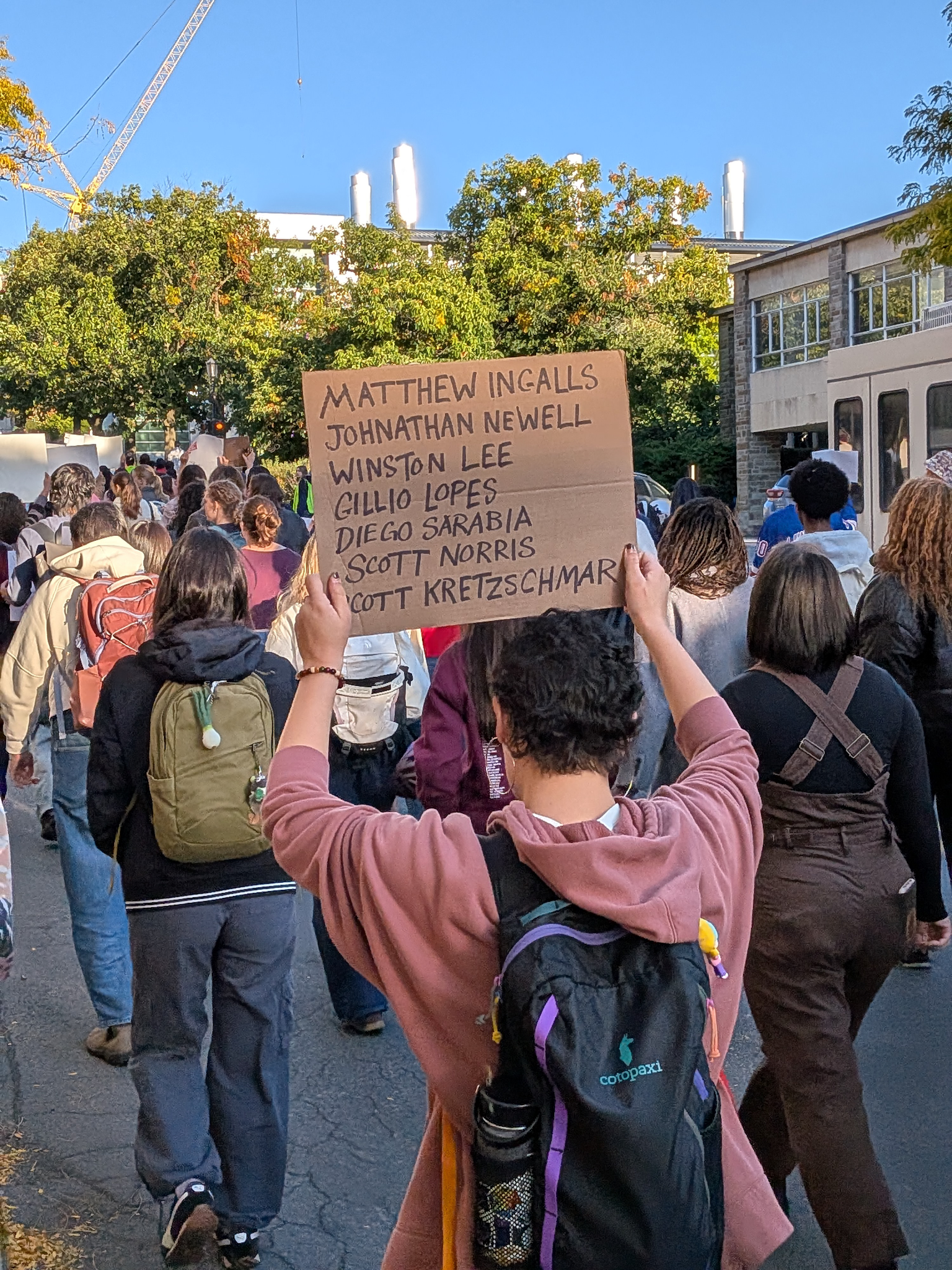
Thousands of Cornell students and community members joined an October 5 rally protesting the university’s response to a 2024 sexual assault involving a former fraternity, a situation now commonly referred to as the “Cornell Seven.” The victim, only identified as Jane Doe, filed a lawsuit that has drawn national attention over recent weeks.
At the rally, held on Cornell’s Ho Plaza, students and staff spoke angrily about the Cornell administration’s response to the incident, some calling for the resignation of University President Michael Kotlikoff and other college administrators—and questioning the integrity of Cornell’s police department.
“We won’t stand for the police department who deliberately covered up this case, who took Jane Doe’s 120-page transcript and turned it into a six-page summary that didn’t even include the word ‘rape’ at all,” one speaker said.
Jane Doe was a sophomore at the school at the time of the incident. She claims the seven men, of the Chi Phi fraternity, sexually assaulted her and coerced her into taking drugs, including ketamine. Tompkins County District Attorney Matthew Van Houten had previously closed the case, saying there was not enough data to support Jane Doe’s case.
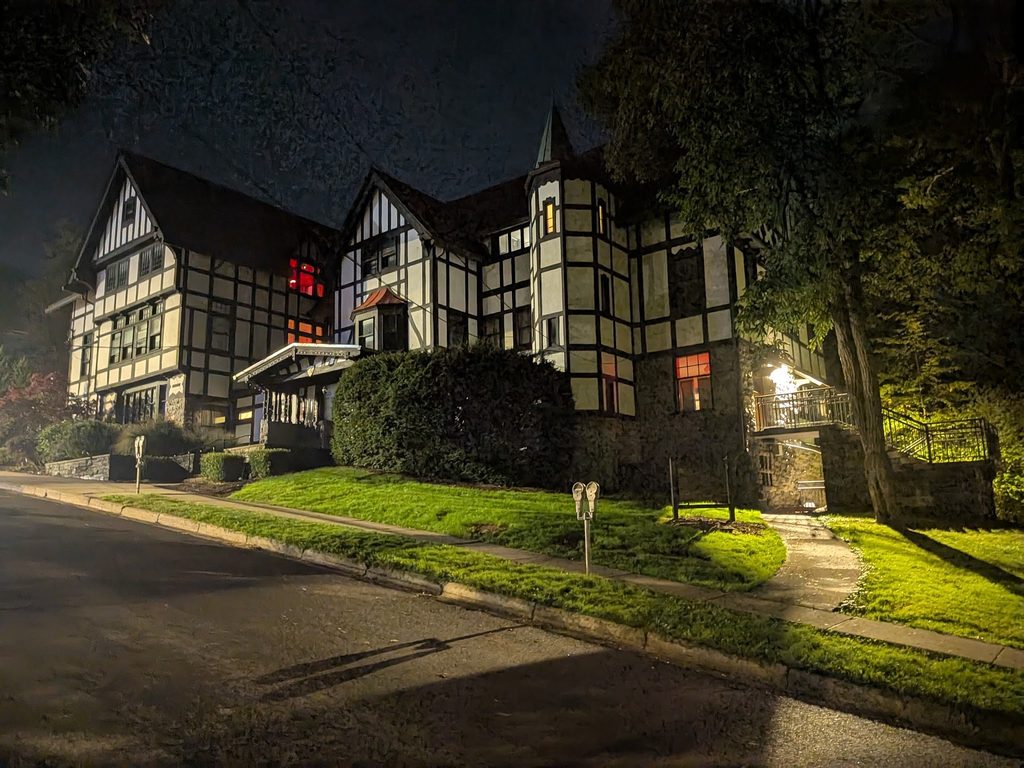
| Greek Life and the Cornell Seven The now-infamous alleged “Cornell Seven” rape occurred at a “Hawaiian Night” event at Cornell’s chapter of the Chi Phi Fraternity, which, established in 1824, is the oldest American men’s college fraternity. On November 8, 2024, Cornell placed the Xi chapter of the Chi Phi Fraternity on temporary suspension, citing violations of the student code of conduct. Leadership of the Chi Phi Fraternity said all of the accused men were kicked out of the chapter within three days of Jane Doe filing a November 14, 2024, statement to Cornell police. In Jane Doe’s lawsuit, filed on September 16, 2026, the Cornell chapter of Chi Phi was listed as a defendant alongside her Delta Delta Delta sorority, Cornell University, and the seven men that she alleges sexually assaulted her. In a public statement, Cornell said the Xi chapter of the Chi Phi fraternity “remains barred from campus.” Of the accused men, Matthew Ingalls and Jonathan Newell were expelled from the university. Winston Lee and Gillio Lopes were given lengthy suspensions and disciplinary probation from Cornell. Diego Sarabia, who had already graduated by the time of the ruling, was issued a persona non grata order (ban from the premises). The least severe punishments were given to accused bystanders Scott Norris and Scott Kretzschmar: to study sexual harassment and prepare reflection papers based on their actions. All of the men except Ingalls and Newell will be able to graduate and receive a diploma from Cornell. |
After the case resurfaced in September of 2026, Governor Kathy Hochul named Attorney General Letitia James as a special prosecutor on the case, saying she had “lost faith” in Van Houten. All seven accused men have defended their case and denied any wrongdoing with regards to Jane Doe’s claims of sexual assault.
At the rally, organizers then led a march to the university’s Day Hall—which houses the offices of many campus administrators. Earlier that day, the building was vandalized by a small, isolated group of people protesting the University’s response to the incident. Graffiti and a smashed window appeared to be removed by the time of the evening’s protest.
“Free the campus from the frats,” protesters chanted as they marched. “Tear down the f*cking frats.”
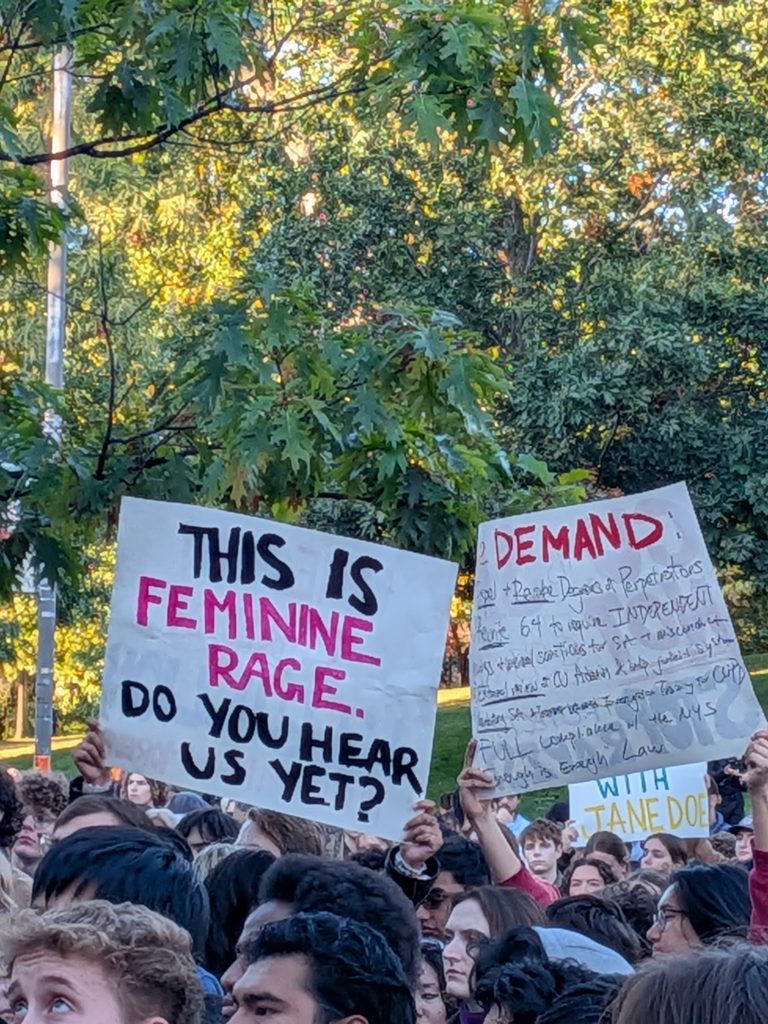
When the lawsuit resurfaced and the case was reopened in September, it was met with national attention. Many eyes looked to Cornell’s administration.
“There have been countless gross mishandlings of discipline in this university in the past two years,” said one speaker, who is a fourth year PhD student, trans woman, and sexual assault survivor.
“The seven men who raped Jane Doe are being protected by this university,” she said. “Apparently, there’s no immediate action necessary to protect the university community. We know this because they still continue to attend classes.”
“At the beginning of this semester, Cornell administration gave two graduate workers who protested against genocide in Palestine, Momodou Taal and Amandla Thomas-Johnson, an impossible offer: requiring them to teach in order to get funding to finish their PhDs—despite them being unable to legally re-enter the country,” the speaker said at the rally. “There is one unifying factor running through all of these events and all of the many more cases that have happened to this university. Every single one of these cases was handled under the administration of the president of Cornell University, Michael Kotlikoff.”
In a public statement, Kyle Kimball, Cornell Vice President for University Relations, said: “We take sexual violence extremely seriously. The presidential Task Force on Campus Sexual Assault was launched shortly after this incident and issued a report in March 2026. Several of the recommendations have already been implemented, while others are in development with oversight by a university implementation committee.”
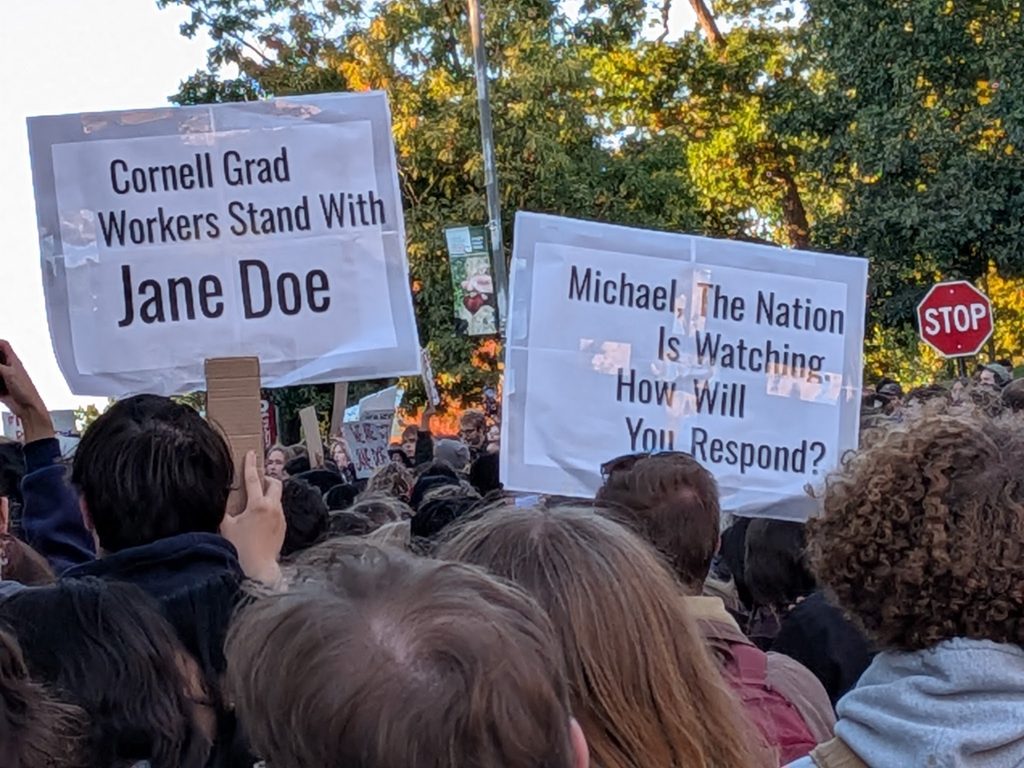
While speakers at the rally attacked different angles of the university’s actions regarding the rape, a common thread emerged. The rape—and its circumstances—hit close to home.
“I believed that I found a place where every person could belong. Where any person could be protected. Where any person could be heard. So imagine the disappointment of discovering what can happen when that ‘any person’ needs help,” said another speaker, alluding to the lack of support networks for people like Jane Doe.
“Too often,” she said, “we are met with silence.”

Just as the news was unfolding, Democratic Representative Alexandria Ocasio-Cortez, of New York’s Fourteenth Congressional District, was visiting Ithaca for a town hall event.
At the event, hosted by More Perfect University at the Ithaca Downtown Conference Center, Ocasio-Cortez addressed the rape incident right away.
“We’re going to dive right into the Q&As, but before we do that, I want to address one of the most pressing issues that we have seen come out of Ithaca, just this past week, which is the news coming out of Cornell University about what they did regarding a ‘Jane Doe,’” Ocasio-Cortez said.
“I want to be clear that the culture of rape, sexual assault, and pedophilia is protected in elite institutions across the United States and including Cornell University,” she said. “It has got to stop. This entire country is sick and tired of not just financially corrupt but morally corrupt leadership.”
“This is a culture. This is the norm. These are practices. And what we must do is understand that we cannot protect those spaces anymore,” Ocasio-Cortez said.
Be First to Comment