
Recently, following the discovery of Stravinsky’s “Chant funèbre”, the authentication and premiere of two previously unknown organ works by Johann Sebastian Bach captivated the music world. The works had remained hidden from view for more than three centuries.
The two compositions, now officially incorporated into the Bach Work Catalog, or Bach-Werke-Verzeichnis (BWV), are an organ “Chaconne and Fugue in D minor” (BWV 1178) and a “Chaconne in G minor” (BWV 1179). They are believed to date from the early years of Bach’s career, likely around 1705, when he was a young organist in Arnstadt, Germany, and nearby towns. Though he was still in his late teens and early twenties, the discovered works show Bach was already experimenting with varying forms, harmonic boldness, and traits that would later define his mature style.
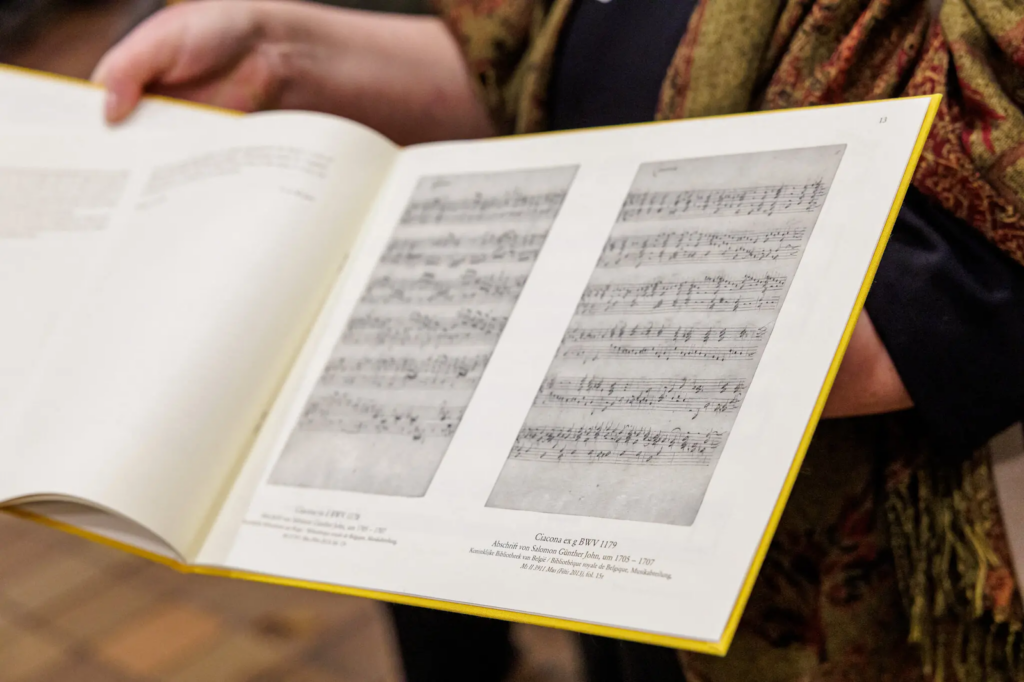
The story of their rediscovery starts all the way back in 1992, when musicologist Peter Wollny, now the Director of the Bach Archive in Leipzig, encountered two anonymous organ manuscripts in the Royal Library of Belgium in Brussels. Although the pieces showed remarkable quality, their authorship was uncertain for decades.
Over the next thirty years of painstaking research, Wollny and other scholars examined stylistic fingerprints, paper watermarks, and handwriting. A key breakthrough came when the copyist was identified as Salomon Günther John, a known student of Bach. While the manuscripts are not in Bach’s own hand, this connection, combined with its structural evidence, allowed musicologists to attribute the works to Bach.
On November 17, 2025, the two pieces were performed publicly for the first time in roughly three hundred years at St. Thomas Church in Leipzig, where Bach is buried. The premiere was given by the renowned Dutch organist Ton Koopman, a leading artist on Baroque performance practices. Although they are shorter than many of his later masterpieces, these pieces offer invaluable insight into the formation of Bach’s musical language.
Since the Leipzig premiere, the works have attracted international attention from performers and scholars alike, with further performances and recordings now being planned.
The continual rediscoveries serve as a reminder that even for musicians as thoroughly studied as Bach, history still holds the potential for new discoveries. More than three centuries after they were written, the newly uncovered works offer listeners something new.