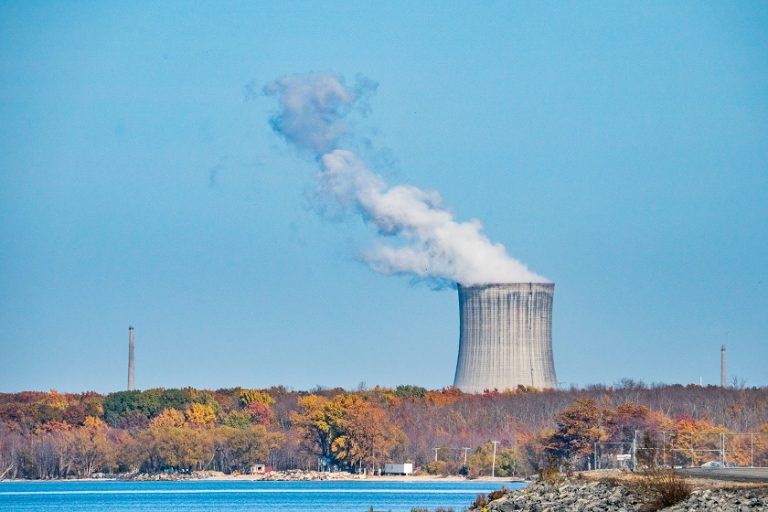
The power of the atom entered the public consciousness through its use at Hiroshima and Nagasaki, a legacy that continues to shape how it is viewed today. By the mid-twentieth century, it was supposed to be the fuel of the future, promising clean, abundant power. Instead, disasters like Chernobyl and Fukushima, combined with cultural portrayals such as The Simpsons and its glowing green waste, cemented fear in the public imagination. Long before Americans understood how a reactor worked, they learned that it was something dangerous, uncontrollable, and a risk that was not worth the reward. As a result, nuclear power and innovation have stalled in the United States. Meanwhile, countries like France continue to move forward and now generate seventy percent of their electricity from nuclear power. For reference, twenty percent of America’s power is sourced from nuclear power plants. With towns like Oswego, New York, trying to open a fourth power plant and more than 1.5 billion dollars of funding pledged to reopen Three Mile Island in Pennsylvania, the long-anticipated nuclear future is beginning to emerge.
Today, nuclear power’s perception is being challenged by outright necessity. With a growing focus on artificial intelligence (AI), electrification, and clean energy, nuclear power is becoming a solution impossible to disregard. Unlike fossil fuels, nuclear energy produces zero carbon emissions and can deliver massive amounts of energy around the clock. Renewable sources such as wind and solar struggle with intermittency, securing nuclear power as the best option for clean, sustained electricity. Currently, nuclear fission is the method used to extract power from uranium. This generates dangerous waste, which can remain radioactive for millions of years. However, if the United States commits itself to nuclear power, it could reopen the door to long-term investment in nuclear fusion, a technology that has the potential to generate enormous amounts of electricity with almost no long-lived radioactive waste.
The shift is already underway with plans to reopen Three Mile Island. The site is long associated with the 1979 partial meltdown that effectively ended nuclear construction in the United States. In September 2024, Constellation Energy announced plans to invest 1.6 billion dollars into upgrades and repairs. The plant is scheduled to reopen in 2028 as the Christopher M. Crane Clean Energy Center and represents a striking reversal of decades of nuclear stagnation. The demand is there too, with Microsoft signing a twenty-year agreement to purchase power from the facility to meet the energy demand of its expanding AI-data centers.
Governor Kathy Hochul has announced plans to build a new reactor upstate, citing electricity demand for data centers and AI infrastructure. Oswego, a small city with seventeen thousand residents located on the shores of Lake Ontario, is a “goldilocks” location. Oswego is a particularly strong candidate because of its location and existing history; Lake Ontario provides abundant water for cooling, there is a high energy demand nearby, and it already has the infrastructure and an experienced workforce. Within ten miles of the city already sit three nuclear power plants, and local leaders are actively advocating for the new reactor to be built in their community. Constellation Energy is the city’s largest employer, supporting nearly three thousand jobs, with average salaries of around one hundred thousand dollars per year. Additionally, each plant brings in thousands of construction jobs and a steady influx of specialized workers for maintenance and refueling.
Despite these benefits, public concern remains high. Nuclear disasters dominate collective memory, even though statistically, nuclear power is among the safest forms of energy generation. Nuclear workers face fewer occupational hazards than those in coal, oil, or gas industries and do so without polluting the air. The largest unresolved issues are long-term nuclear waste storage and the high cost barrier to entry. However, solutions are emerging. Restarting existing plants like Three Mile Island avoids zoning battles and infrastructure costs while small modular reactors cut expenses through factory production. Storage of nuclear waste remains an unsolved problem, but funding fusion research could change that.
With mounting pressures from increasing energy demand to climate change, nuclear power might soon become a staple of New York’s grid.