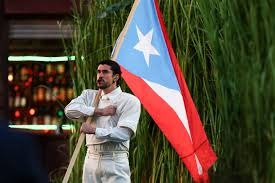
What role does culture play in this polarized moment in US history? On February 8, 2026, the Super Bowl halftime show gave us a glimpse into the potential of music as a tool for change. Benito Antonio Martínez Ocasio, also known as Bad Bunny, performed on one of the largest televised stages in the world during the Super Bowl halftime show.
This was one of the most controversial performances to date, considering the current political climate. When Bad Bunny was picked for the halftime show, it sparked outrage among many conservatives, who said he was an un-American choice to perform. President Trump himself weighed in both before and after the show, even going so far as to call the performance a “slap in the face to our country.”
After his public denouncement of Immigration and Customs Enforcement the week before at the Grammys, many expected Bad Bunny to make another explicit political statement with his performance, but what he did may have arguably been even better. Bad Bunny, who is originally from Puerto Rico, used the stage instead to celebrate Latino heritage and culture. The performance showed many scenes of life in a small village, from a sugar cane plantation, to a house Bad Bunny deemed “La Casita,” that displayed traditional Puerto Rican architecture, to the love story of a young couple, culminating in their wedding ceremony. Bad Bunny was also shown giving his Grammy to a little boy and telling him to believe in himself. Much of the choreography was inspired by traditional Latin dances like the salsa and bomba, with some modernization.
Almost the entire show was sung in Spanish, with the exception of Lady Gaga’s “Die with a Smile.” Bad Bunny did speak in English at the conclusion of his performance, for the first and only time, to say “God bless America,” before listing countries throughout all of North and South America. This served as a reminder that America is more than just the USA.
Bad Bunny did a great job in incorporating these solemn moments without letting them take over the show. Scenes of power lines referenced the consistent outages in Puerto Rico since hurricane Maria in 2017. Sugarcane plantations represented the long history of slavery in the Caribbean, where workers are still not being paid enough. Overall, the rich portrait painted of Latino culture and heritage was one of the most powerful political statements Bad Bunny could have made. At the Grammys, Bad Bunny told the audience that love was more powerful than hate. But at the Super Bowl performance, he went one step further and showed it.