
Chinese New Year, also known as Spring Festival, has been celebrated for thousands of years and marks the beginning of the lunar calendar. Typically, Chinese New Year falls sometime in January or February, with each new year representing one of the twelve Chinese zodiacs. This year, Chinese New Year is on February 17, and it will be the Year of the Horse. As the most significant holiday in Chinese culture, Chinese New Year is a time when children return home to celebrate with their families through traditions that are deeply rooted in folklore and superstitions.
Preparations for Chinese New Year start at the beginning of the last lunar month of the year. To ensure a fresh start to the new year, people clean their houses thoroughly and buy ingredients like meat, flour, fruits, and vegetables in preparation for the New Year’s meal. Kids are also excited to go shopping for new clothes to wear in the new year.
According to Chinese folklore, a week before the New Year, the Kitchen God is supposed to report back to the Jade Emperor on the activities of each household in the past year. Before he leaves for the heavens, people offer sticky barley candy to the Kitchen God to win his favor—or seal his mouth shut to prevent him from tattling to the Jade Emperor. The Kitchen God, who has a severe sweet tooth, can never resist eating the candy. Thanks to this trick, the Jade Emperor never finds out what people have actually been doing throughout the year.
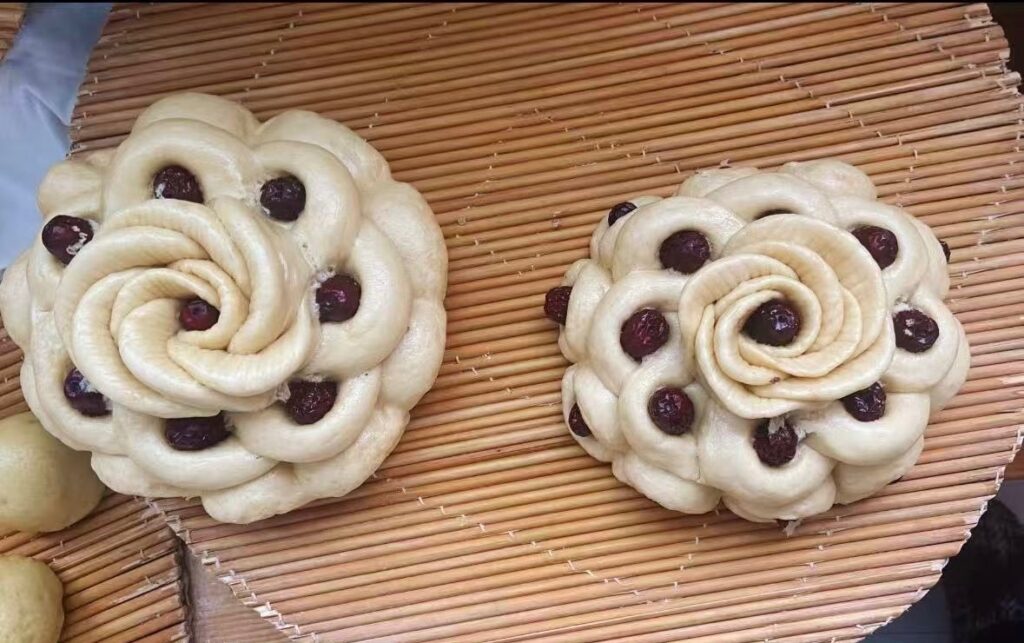
Four days before the New Year is the time to make steamed buns. People make fish and hedgehog-shaped buns to symbolize prosperity, as well as date buns, vegetable buns, red bean buns, plain buns, and flower cake.
New Year’s Eve is the busiest day of preparation. Lanterns are hung up on walls and doors along with blessings of wealth, happiness, and good health written on red paper. Altars are also set up for gods and ancestors. Families often travel long distances to have a family reunion and a “togetherness dinner.”
The traditional foods eaten on New Year’s Eve vary between different areas of the country. In northern China, dumplings are an essential New Year’s dish, while in the south, spring rolls and rice cakes are more common. After a long day of preparations and a delicious dinner, there is one more thing to do before going to bed—placing the fish and hedgehog buns on top of the door, facing outwards, so that they can collect treasure.
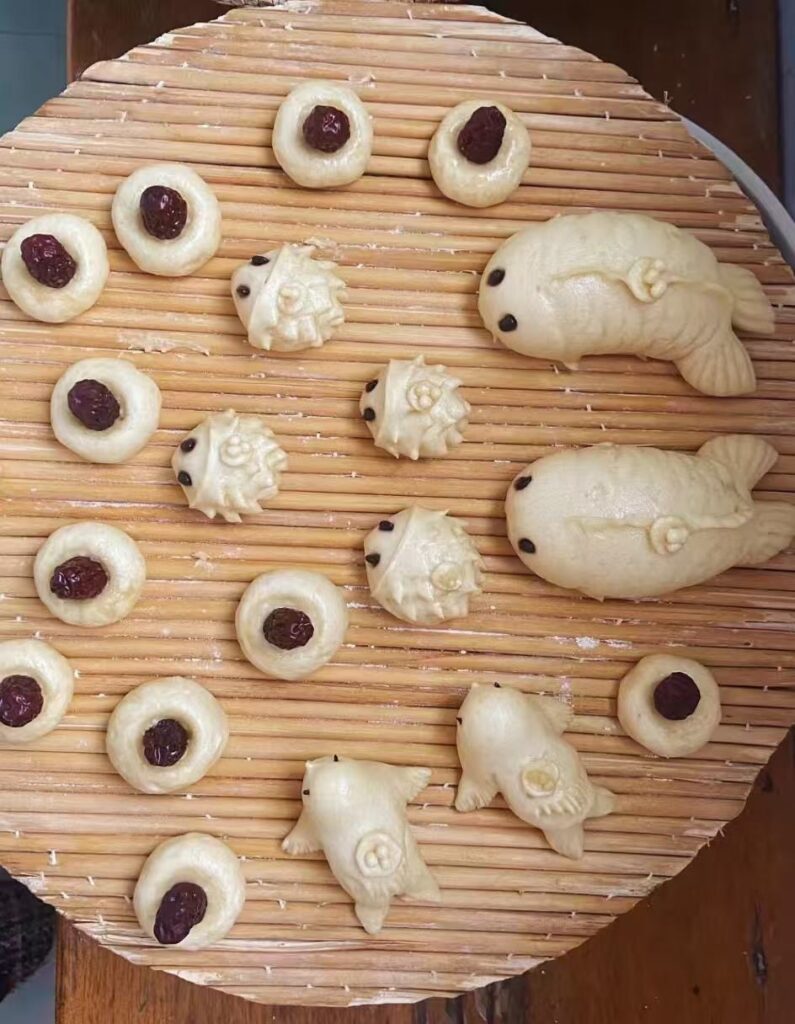
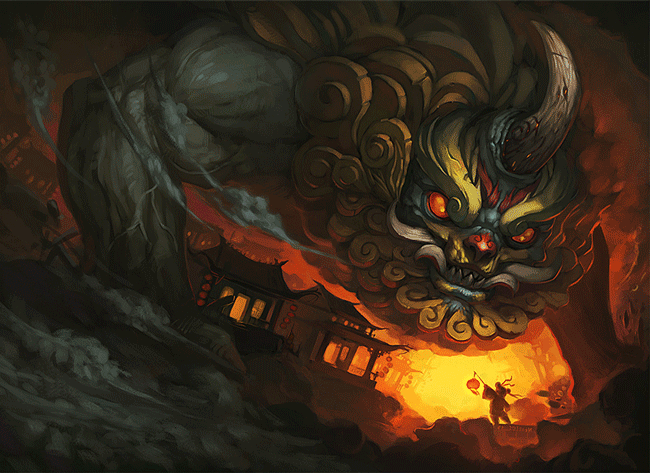
On New Year’s Day, people wake up very early to worship gods and ancestors by offering incense and food. It is believed that waking up early on New Year’s Day results in a productive and energetic year. Then, the fish and hedgehog buns placed facing outwards the day before must be turned, facing inwards, to bring the treasures they collected home. Next, firecrackers are lit to scare away evil spirits like Nián, a mythical beast that is said to attack villages and eat people every New Year’s.
The last thing to do before breakfast is the time-honored tradition of wishing a happy New Year to one’s elders. In some villages, it is still common to kowtow (kneeling and touching their forehead to the ground in worship) while wishing a happy new year. After wishing family members a happy New Year, children typically receive red envelopes filled with money and decorated with shiny gold words. Red envelopes are usually given by the elders of a family, passing their blessing to the children to wish prosperity and good luck and ward off evil spirits. The money in red envelopes is usually new, as old bills only bring old luck.
Then, people leave the house and give the same wishes to their neighbors. Everyone prepares candy and treats for children who come to their houses, similar to trick-or-treating.
Dumplings are traditionally the first breakfast of each New Year. A coin is hidden inside one of the dumplings, and whoever eats the dumpling with the coin will be very lucky in the coming year. If no one gets the dumpling with the coin, everyone will be lucky.
The first day of the new year is not just a celebration. Superstitions dictate that people must be mindful and avoid doing certain things to keep their good fortune. No sneezing is allowed during the morning of New Year’s Day, as it will offend the gods that are present. Opening drawers and sweeping are also prohibited because your luck will be let out or swept away. No one should use sharp objects such as scissors and knives, so as not to disrupt the wholeness of everything. Additionally, black or white clothes should not be worn as they are colors of mourning.
Even after New Year’s Day, the celebrations are not yet over. For the next two weeks, people continue visiting friends and getting together to eat. The celebrations only come to an end on the first full moon of the New Year, also known as the Lantern Festival. Lion and dragon dances are performed throughout the day, and as evening approaches, many lanterns of various colors are placed on doors, roofs, walls, and yards, or even in rivers to flow downstream. Everything is illuminated by the moon and stars in the sky, and lanterns on the ground and in the water.
The Ithaca community also celebrates Chinese New Year. The Tompkins County Public Library hosts two annual Chinese New Year events: a crafts session on February 14 to make New Year’s themed crafts and decorations like lanterns, red paper blessings, and red paper cuttings, and a thrilling performance by the Cornell Lion Dance Club and the Cornell Illumination Chinese Cultural Dance Troupe on February 21.
Celebrations don’t have to be as elaborate. However, there are still simple ways to make the New Year special, such as sharing a meal with family or making a themed craft, such as origami horses or dragons.