
For the final article of this column, it feels fitting to end with a composer’s history left in the margins for far too long. In past pieces, I have been drawn to the rediscoveries because they reveal how fragile musical history can be. Scores often vanish, manuscripts sit unread in archives, and works that once carried a composer’s ambition and passion can disappear for generations. Edmond Dédé’s Morgiane is one of the most striking examples of that kind of lost music history, not only because it survived but because it had remained unheard for nearly 140 years.
Dédé was born in New Orleans in 1827 and was part of a long-established community of free people of color. In the United States, however, racial barriers sharply limited what kind of musical life was possible for a Black composer. He eventually left the antebellum South, spent time in Mexico, and then settled in France, where he built a successful career in Bordeaux as a conductor, violinist, and composer. Over the course of his life, he wrote extensively for the French stage, yet the work now seen as an important part of his composition, such as the four-act opera Morgiane, ou Le Sultan d’Ispahan, was never performed or published during his lifetime.
Completed in 1887, Morgiane is especially significant because it is regarded as the earliest known complete opera by a Black American composer. This description alone makes its long disappearance remarkable. Before the opera resurfaced, its historical place had been almost entirely obscured, and the absence was not simply accidental. Like many works by artists of color, Dédé’s music was not preserved with the same urgency or institutional support given to more established white European composers.
The story of the manuscript’s survival is almost as fascinating as the opera itself. The score eventually entered Harvard University’s collection in 2000, but it did not immediately transform Dédé into a widely recognized figure. According to those involved in the revival, the manuscript was later brought to the attention of OperaCréole founder Givonna Joseph, and the effort to prepare it for performance became a years-long project of transcription, interpretation, and restoration. Because Morgiane had never been performed before, there was no established performance tradition to consult, no earlier edition to rely on, and no recording to guide the musicians bringing it to life.
That challenge helps explain why the opera’s return took so long. Reviving a work that has been silent for more than a century is not like pulling a standard score off a shelf. Musicians had to reconstruct a living performance from a handwritten manuscript alone. In that sense, the rediscovery of Morgiane was not one dramatic moment but shows an act of recovery: scholars noticed the source, performers recognized its importance, and companies committed themselves to turning archives into a piece of art.
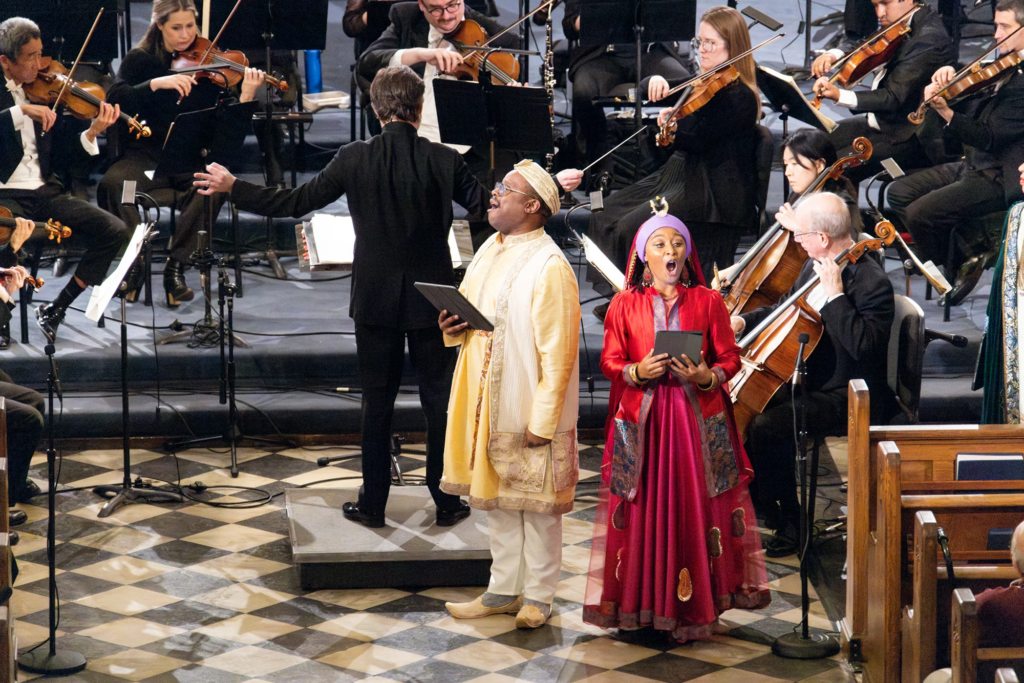
Finally, in January 2025, Morgiane received its first public performance in New Orleans, followed by performances in Washington, DC, New York City, and College Park, Maryland. The revival was led by Opera Lafayette and OperaCréole, and it was presented as the long-overdue world premiere of a major work that had remained hidden for 138 years. That gap between composition and premiere is staggering. Few composers wait more than a season, a decade, or even a lifetime to hear a large-scale work performed; Dédé’s opera had to wait through the collapse of empires and generations of cultural neglect before it finally reached the stage.
One of the first performances took place in New Orleans, the city of Dédé’s birth and baptism, honoring his major accomplishments.The production also featured an all-Black cast, adding another layer of restoration to a work of a composer that had been denied full recognition in his own time. Many musical enthusiasts consider that what audiences heard in 2025 was not just an old score made audible, but a correction to the historical record as a whole.
The revival of Morgiane reminds us that music history is not just about music, but a record of what institutions chose to preserve, publish, and perform. Dédé had the talent and ambition to compose a full French grand opera in 1887, yet history left that achievement buried in manuscript form for more than a century. It encourages listeners to question what else has been omitted from history.
I hope you enjoyed this series of recurring columns as much as I enjoyed writing it! Working on this column has deepened my appreciation of the efforts of music restoration and for surprising ways music from the past can still bring today.
Be First to Comment