Barricaded behind haphazardly stacked desks, a row of dusty looking filing cabinets lies at the very end of E-Wing, containing stacks upon stacks of past issues of The Tattler. Within my little excavated path through a bundle of chairs, I sat and explored the stories and issues from the past and picked a few of my favorites. I hope you have as much fun reading them as I had picking them out!
May 1968
Play Production Presents Problems
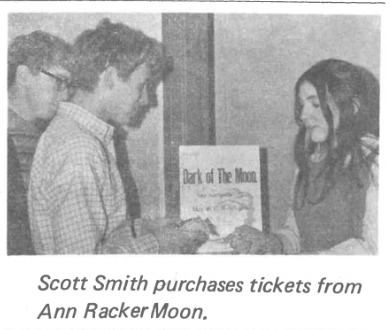
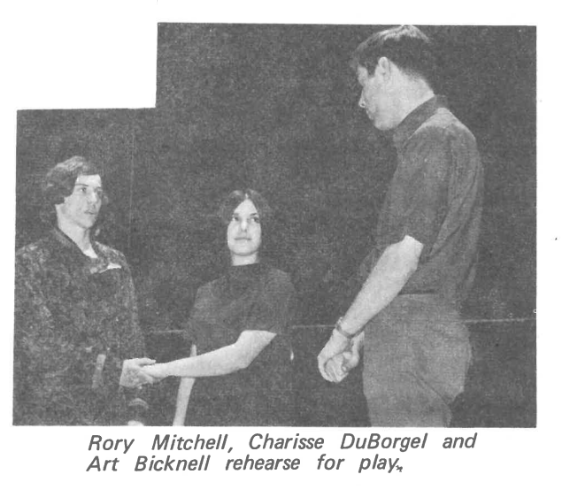
Dark of the Moon, which begins its three-day run on Thursday, May 16, has proven to be an entirely new experience for everyone involved. As Mr. Henry Neuman, director of the production, explained, “We are creating it as we are going along. No one has ever seen a production or photographs of the play.”
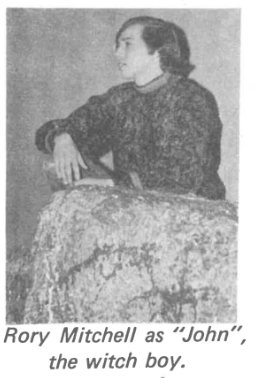
The show is very complex, both dramatically and technically. A high point in the play is the primitive Southern Baptist revival meeting in which the townspeople attempt to take Barbara Allen away from John, the witch boy. Actual songs and preaching techniques are being used to intensify the scene to the feverish pitch of salvation attained at such church meetings.
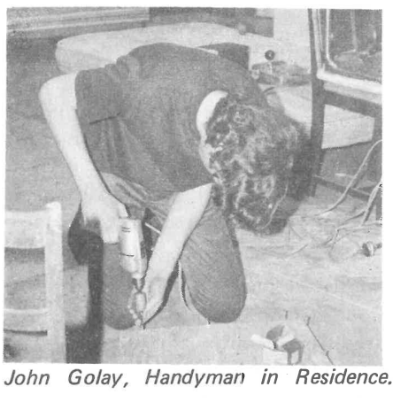
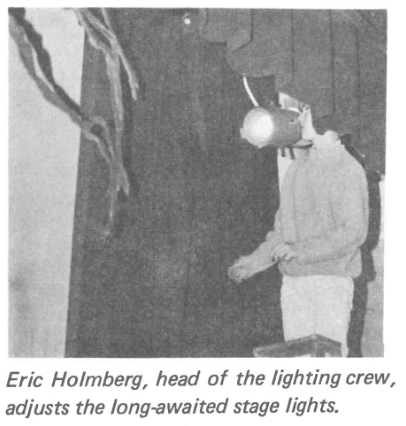
Scenery, lighting, and props are all essential to the re-creation of the barren appearance of the Tennessee Hills, which sets the mood for the entire play. Crews have been busy building the difficult sets, collecting the necessary props, and experimenting with lighting techniques to achieve the proper setting.
Costumes and make-up will be used to heighten the contrast between the witches and the townspeople. The grotesque sensuality of the witches’ costumes will be combined with the simple, washed-out clothes of the poverty-stricken hill people.
The make-up crew will have the particularly difficult task of contrasting the airy, supernatural quality of the witch people with the stark, gaunt realism of the townspeople, as seen in John’s dramatic transformation from witch to human.
Lucy Suchman is assistant director, and Gracia Woodward is stage manager. The crew heads are John Golay, scenery; Eric Holmberg, lighting; Judy Salpeter, props; Christine Killory, costumes; Marianne Lent, make-up; and Ann Racker, publicity. Charisse Duborgel will play Barbara Allen, opposite Rory Mitchell as John. Art Bicknell is Preacher Haggler, and Barbara’s parents are played by Bruce Hamilton and Debbie Rush. Alan Heppel, Vas Prabhu, Clara Balkley, and Ann Rhodin are witch people.
The crews and cast all hope that the production will be as exciting for the audience as it has been for them.
April 1996
Editorial
By Tattler Editorial Board
Last month, another decision made with little or no student input was announced. The decision was that class competitions would no longer take place. When the decision was announced to Student Council, the members seemed to have mixed feelings.
Few would argue that the competitions have brought a positive result to the high school. The competitions created tension between the classes. Class members became angry with the members of other classes and with those who judged the events. Many felt the judging had been unfair, and others were upset that they had been told that the only reason they should participate was so their class could earn money. When several Seniors attacked the Junior and Freshman classes at January’s pep rally, it was clear that something had to be done.
Obviously changes needed to be made, but the “throw the baby out with the bath water” mentality is not necessarily the best course of action. Those in charge of the competition should have looked seriously at other options.
First of all, it was never clear who was in charge of the competitions. If one wanted to talk to whoever was in charge of them, he would have been run on a circuitous route from the Student Council officers to the administration and back again. Very few knew who the judges were or when the judging was taking place. Furthermore, the judges weren’t always informed of all the rules of the competition. When the Sophomore Class blatantly violated the rules of the window painting competition in January by not incorporating the theme of winter homecoming and making it an outright advertisement for a fundraiser of theirs, they were rewarded for breaking
the rules by winning the competition.
Also, the whole basis of the competitions was misguided. Giving a monetary reward for winning the competition sent the wrong message to students. The fact that a school must pay its students to get involved in class activities is ludicrous.
The Student Council and administrators should have tried to devise other options to modify the competitions to make them more positive, instead of just defenestrating the whole idea. More should have been done to make the judging impartial and the rules known and understood by all. Now students must rely only on their class officers, who were having enough trouble creating class unity with school-sponsored activities, to come up with ideas to bring their class together. The class officers and Student Council should be working on solving this problem, instead of planning more ways they can make money.
June 1930
Advertisement