
“It’s demoralizing. Literally a ‘shitty’ duty. I used to be able to meet with my colleagues like a professional. Now I’m a babysitter. For bathrooming. In a high school. Not #lifegoals,” is a reflection from an IHS staff member on how bathroom duty has been going since it was put into place last school year. Originally, the system was designed to help enforce and ensure student safety throughout the school, which has been effective to an extent. However, various teachers have expressed how this has added additional difficulties to their school days and ability to thoroughly educate their students. While bathroom monitoring may serve as a solution to ensuring student safety, the Tattler Editorial Board believes that the system must be reevaluated in a way that respects the time and occupation of our teachers.
Starting last year, bathroom monitoring was set in place to address safety concerns regarding the bathrooms at IHS. Prior to the system being put in place, students were often using the bathroom to skip classes, vape, and sometimes even become violent with one another. As a result, teachers were stationed outside of bathroom entrances in order to ensure that students weren’t misusing the bathrooms, in addition to maintaining a civil attitude in the communal space. The original system, which was only supposed to last six months, was quickly adopted into the long-term commitment we know today.
The goal of supporting student safety has been partially effective, and many teachers feel that there are merits to the system. Several teachers have said bathroom monitoring has reduced student wandering, violence, and bathroom misconduct holistically. However, problems such as drug abuse or phone abuse are harder to control. Additionally, the current design of the bathrooms has proven to be an obstacle for many teachers. With floor-to-ceiling walls, many teachers have expressed their concern regarding the lack of visibility if something goes wrong.
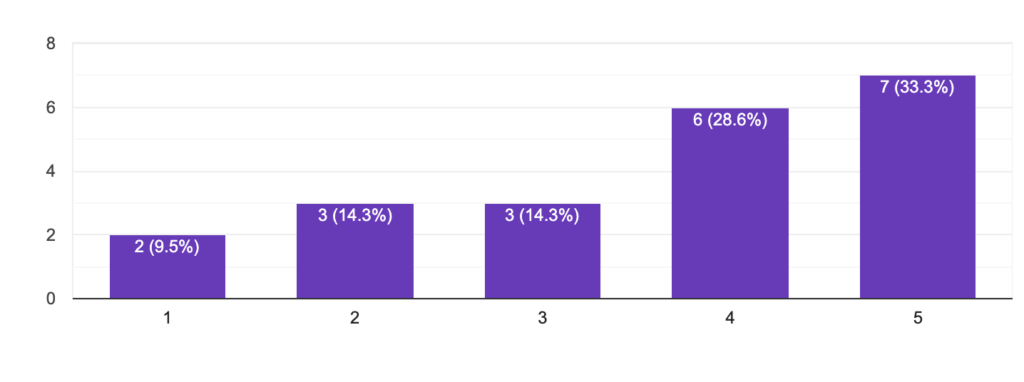
Multiple teachers have stated that bathroom monitoring has become an obstacle in their work, outweighing the marginal effectiveness of the system. When teachers were asked to scale the extent to which bathroom monitoring has negatively impacted their ability to help students on a one-to-five scale, with five being very impactful, sixty-five percent of teachers responded with a four to five. Attention is split between the classwork at hand and the responsibility to manage the bathrooms and pay attention to students entering and exiting the bathroom. In an interview with Gina Cacioppo, an Ithaca Teachers Association (ITA) Board Representative and art teacher at IHS, she stated, “I can’t get any work done if I constantly have to email what students don’t have passes.”
In addition to teachers, students have also expressed frustration with the current system. Lily Cowder, a student BoE representative, reflected on the current bathroom monitoring situation, stating, “Bathroom monitoring takes away from teachers’ planning periods. The system seems ineffective for the amount of time that teachers have had to set aside in order to fulfill this duty.” On top of this, if students need to make up a test or ask for additional assistance, they often find themselves stuck outside a bathroom with their teacher on duty. Evidently, the presence of bathroom monitoring has negatively impacted efforts from both students and teachers to provide and receive the best possible conditions for success in class.
Additionally, bathroom monitoring has significantly impacted the abilities of teachers to collaborate and work together to create lessons and curricula for students. Due to bathroom monitoring being constant throughout the entire school day, teachers have lost time for PLC (Professional Learning Community) meetings, time set aside for peer discussion and feedback on each teacher’s curriculum. This has significantly impacted teachers’ ability to create the highest quality lessons that they can, with one even stating that, “losing planning time with our teams is a huge, huge loss. This has meant that even though we have the biggest curriculum change in decades coming, we have no time to prepare for this shift as a group.” Teachers need to be able to communicate and collaborate, especially if they teach the same class. Without this, students face vastly different experiences in the same course, and teachers face a limit on how much they can learn from each other and grow.
Another consequence of bathroom monitoring is that it has inherently affected the personal lives of teachers. Due to the large commitment of bathroom monitoring, many teachers are forced to meet outside of school hours to collaborate with other teachers. Alexandra Hartley, a social studies teacher at IHS, stated, “We [IHS Government teachers] are meeting after school today, and now I lose time with my family since we’re meeting outside contract hours because we’ve lost time during the day.” Teachers should not be forced to set aside their lives in order to make classes the best they can be—they should be given enough time within the constraints of their pay hours.
There are various feasible solutions that could be implemented instead of bathroom monitoring that would benefit students and teachers alike. One is that more safety monitors must be hired and present in the hallways at IHS, especially near the locations of the bathrooms. Currently, IHS is short of about six hallway teaching assistants, and while it may be difficult to reallocate the school’s budget in order to employ more people for these positions, it is vital that the proper number of hallway teaching assistants is hired so teachers are not being forced to pick up the extra load. The job of hallway teaching assistants is essentially what our teachers are doing right now as bathroom monitors—they are expected to supervise students in common areas, enforce rules, assist with transitions, and ensure the safety of students outside the classroom environment.
If bathroom monitoring is the only foreseeable solution to ensuring student safety, then it should be considered that the role should also be extended not just to teachers, but to administrators as well. This year, IHS has more administration positions than last year, meaning there are more adults in the building who are responsible for ensuring the safety and productivity of students. In an interview with Christopher Carver, a social studies teacher and ITA representative at IHS, he stated that, “Admin needs to own the problem of attendance generally, and bathrooms specifically are the biggest hole in our attendance policy.” The lack of cooperation between teachers and admin regarding bathroom monitoring has evidently led to a decrease in the system’s effectiveness. With four assistant principals and two deans, the burden should be shifted off teachers and better distributed onto administration as well.
It is crucial that the bathroom monitoring system is re-evaluated. While the system has proved some effectiveness in terms of student safety, the burden left on teachers and staff members is beyond the scope of their roles as educators. It is a right for teachers to have adequate time to design material for their students, especially as the curriculum and material are constantly developing and evolving. This right has been heavily restricted and challenged since the beginning of bathroom monitoring. Teachers and staff do their best to ensure our education is provided to the best of their abilities. Now, we must make it a priority to ensure they are provided with the time, resources, and proper environment to do so. A teacher’s responsibility is to educate the community, not to take over a shitty job.