
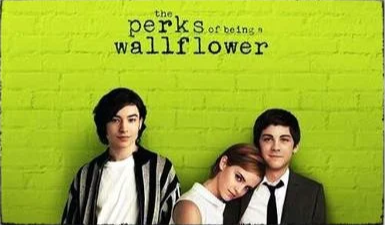
The Perks of Being a Wallflower is in my top five favorite books of all time. At slightly over sixty thousand words, it is a relatively quick read and still labeled as a modern classic in literature. The story begins in 1991, covering about a year of the main character Charlie’s life, and features many elements of teenage culture from the time, such as the popularity of radios and record stores. Interestingly, the location of the story, Pittsburgh, Pennsylvania, is very rarely explicitly detailed, typically only when landmarks pivotal to the plot (such as the Ford Pitt Tunnel) are described. This suggests that the novel’s events could be equally valid anywhere; Charlie’s journey is based on elements of universal struggles, while of course having certain challenges specific to his individual character.
This novel’s themes include the ideas that belonging is a complex and multifaceted gift of a feeling and that superficial connections are insufficient for satisfaction in any type of relationship. These are explored in an incredibly interesting way, with the entire story being made up of letters Charlie sends to an unknown person, who is theoretically the reader. Early on in the story, Charlie starts disclosing information that paints a picture of his life. For example, within the first letters, we learn his best friend, Michael (although he uses pseudonyms to protect peoples’ identity), committed suicide in the previous school year.
After this tragedy, Charlie is more alone than ever. He is a very serious and pensive young man, with no friends and an often strained family life. There is a complicated barrier between him and others, making him feel incredibly lost, but his depression doesn’t come across explicitly in most of the story. Instead, the reader views Charlie as an atypical feeler of emotions when his observations grow even more detached. He lives as a viewer of the world, rather than as an active participant in life. This barrier that he operates in leads the adults in his life, like his English teacher and mentor, Bill, to tell him to engage more with others. Bill ends up having a profound impact on Charlie, who turns out to love literature due to his influence. Bill challenges him to improve his writing and reading comprehension by writing essays on classic novels, fostering the potential he sees in Charlie.
Charlie also develops friendships with Patrick and Sam, two upperclassmen siblings-in-law who are part of an unfamiliar social scene. They are highly complex characters, who unintentionally harm Charlie by exposing him to alcohol, drugs, and smoking. The book then explores how these become crutches for them to escape feelings and troubles. While Patrick and Sam seem like “bad influences” in this manner, they are also possibly the best things that have ever happened to Charlie. He develops real friendships with them, learning painfully brutal lessons about how to be honest and connect with others. But most importantly, he is truly accepted for everything that he is and is not.
Following the trend of relationships being the most impactful thing in human lives, the book touches on Charlie’s childhood and upbringing having been marked by many challenging family dynamics. For example, his father’s toxic ideas of masculinity made the pair largely unable to connect. Charlie’s sister feels he is weird and a nuisance, often treating him poorly through isolation and othering him. This contrasts heavily with her highly plot-relevant moments of love and care, exploring complexity even in supporting characters. Lastly, his Aunt Helen, who passed before the story begins, is remembered by Charlie as one of the only people who understood him. This memory of their relationship grows more complicated and confusing as he grows throughout the story, mirroring the development of his world.
Overall, The Perks of Being A Wallflower is truly beautifully written and narrated by Stephen Chbosky. And in order to honestly and faithfully illustrate the rough world of growing up in this way, it is necessary that Chbosky not skirt around the truths of teenage life, which are often more heavily featured in, although not at all unique to, areas and times that were far more unsupervised, wild, and independent. This leads to the presence of suicide, drugs, alcohol, as described, but also complex storylines involving secretive sexual orientation at a time of persecution, forced closeting, rape, teenage sex, domestic abuse, child sex abuse, and more. This list has caused high levels of alarm and outrage among organizations wishing to engage in book banning.
Over the years, book banning has become an extremely hot topic. Yet the practice is by no means new—US history is peppered with instances of censored media and literature. To use the example of historic racism in the United States, in the times preceding the Civil War, certain states would ban the publication and distribution of any book that supported the abolition of slavery. Similar efforts were taken in the Jim Crow Era, where many books that were seen as supporting overall racial equality (by showcasing interracial marriage or using anti-segregationist thought) were outlawed by many southern states.
But what does book banning really mean? Book banning is the removal of socially, politically, religiously, or otherwise controversial literature from societal framework, either by making it illegal to publish such books, or disallowing them in spaces, such as classrooms, libraries, and bookstores. Calling literature things like “obscene,” “inappropriate,” or “explicit” is how many protesters justify the challenging of books. And despite the historical presence of these actions, book banning as we know it today is a different beast altogether. Evidence from the American Library Association shows the record high number of books banned in a year from “public, school, and academic libraries” was 4,240 in 2023, with a wide overall consensus that the modern age of heavily increased book banning began in the 2020s.
Books are often challenged due to their tackling of sexuality, sexual orientation, and other LGBTQ+ associated topics, along with many other elements, making it no surprise that in the last full calendar year of 2025, The Perks of Being A Wallflower was the second most challenged book in the US, surpassed only by the in-verse book Patricia McCormick’s Sold, and followed by Maia Kobabe’s Gender Queer.
To be clear, it is my personal, strongly held opinion that media with specific content should not be accessible to young children, such as elementary schoolers. Of course, there is no proven “correct” place as to where to draw the line on this issue, and what age students and children should reach before being exposed to certain elements. Entire districts, including high schools with older students who have already undergone years of public school education in health classes, have faced challenges. Even worse, The Perks of Being A Wallflower has even been challenged and banned in public library spaces. This is damaging not only because it restricts access to the novel, but also because hiding stories involving sexual abuse, for example, can result in making people who have become victims of such crimes feel incredibly alone. Seeing these topics covered in media, instead of having the subject tabooed, makes them more likely to make themselves and their stories heard, and cause positive change.
Chbosky’s novel shaped me as a young person and made my thinking more complex, in addition to providing me with incredible enjoyment from reading the heavily intriguing narrative. It’s a shame that such a book would be kept away from anyone old enough and mature enough to learn from what this novel, and what other banned texts, have to teach. Thankfully, here at IHS, we students are lucky enough to live and learn in a place that does not ban books and restrict this form of learning.
Therefore, I would encourage any reader of this book review to exercise your freedoms and check The Perks of Being A Wallflower by Stephen Chbosky from the library during the upcoming school year. Experience what this story is all about.
Be First to Comment