
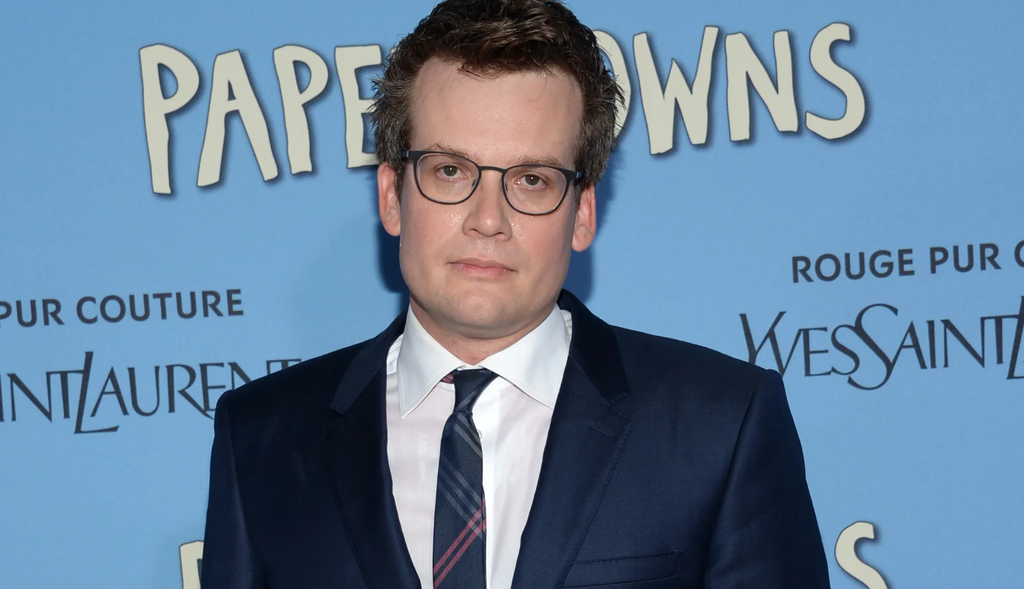
“As a culture, we worship at the altar of fame,” John Green notes in “On Fame and Chappell Roan,” a video from his YouTube channel Vlogbrothers. His new novel, Hollywood, Ending, is all about fame, and the worship of it. It’s also about the machine that exchanges “pieces of yourself for celebrity”. It’s clear that these topics are important to Green—his experiences in 2014, after his novel The Fault in our Stars was published are parallel to the experiences of Kai and Juniper, the two protagonists of Hollywood, Ending. However, Green’s experiences differ from Kai and Juniper’s in a couple ways.
Hollywood, Ending concerns Kai Laramie and Juniper Castillo, two young actors navigating their way through newfound fame and love. They star in a fictional movie, Andy Warhol Never Gets Old, about the iconic 20th-century pop artist, where they respectively play his assistant and a journalist writing an article about him. The novel covers the time from the making of the film to its premiere. Unlike any novel I’ve read before, Instagram holds a major presence..
“Warhol saw the Instagramification of human experience coming and understood the way screens will reshape not just our relationship with pleasure, but also our relationship with fear and outrage,” notes Green in “The Instagramification of Human Experience.” This is why I feel the choice to focus on Andy Warhol is somewhat brilliant on his part. Warhol was so concerned with the effects of modern technology on emotion and meaning. His Marilyn Diptych and Sunset both explore the beauty that is removed through the commodification of beauty. His Nine Jackies examines how TV can remove the deep emotion in powerful events through its excessive coverage on major issues. Warhol seems to have predicted the issues present in social media (or at least some of them): complex human experience is compressed into a shortened version to get more engagement. This is a central theme in the novel: not only in relation to social media, but also with the world of press junkets. Kai and Juniper’s lives, set up in detail by Green throughout the beginning of the novel, are endlessly repeated and simplified by journalists throughout the press tour for the movie. Not only are their lives simplified by the media; their agents sculpt their words to be without any ounce of controversy. This is where the novel shines: showing the inner lives of these two young adults, contrasted with their outer ones. They’re forced to act, even when the film production is over.
But despite the immense focus on the reduction of human complexity, the short length of the novel confines the main characters to a limited amount of depth themselves. This may be a byproduct of the fast pace at which I always end up reading John Green books (a testament to their enjoyability), but his characters end up feeling like puppets through which the author is speaking, not their own independent people. For example, the studio executive who is clearly there just to parrot Green’s favorite jokes. Ironically, the superficiality critiqued so thoroughly in Hollywood, Ending ends up pervading most of the cast.
Hollywood, Ending is John Green’s first adult fiction novel, having previously written only YA fiction and adult nonfiction. This means that he’s writing in a genre unfamiliar to him. In a way, it’s still very similar to his previous works of fiction: a romance between two young people, talking in various locales. It’s weird to apply the phrase “growing pains” to an author as experienced and popular as John Green, but Hollywood, Ending shows clear signs of him trying to find a balance between his old, familiar style and a new, more mature one. I think he manages to pull it off, but the novel leaves me wanting more complexity. Despite these gripes, Hollywood, Ending is a very enjoyable read, brings up interesting questions, and was well worth it. I give Hollywood, Ending 8/10.
Be First to Comment