
Pineapples, palm trees, and pura vida. This summer took me across the ocean and landed me in Costa Rica. I spent two weeks in a town on the outskirts of San José, the nation’s capital. A beautiful couple and their daughter opened up their home to me and two other girls. Each morning on our trek to school, we’d walk through an awakening Heredia. Shop vendors lifted their gates, and distant chatter came from panaderias and the mercado fruit stands. With a fresh cup of rich, sweet Costa Rican coffee in hand, I would begin Spanish classes in one of the quaint, yellow-walled, art-covered classrooms. I shared the experience with a dozen other students from across the United States and world, and with whom I became steadfast friends. When the train whistle marked lunch, the busy town and breathtaking country became our oyster.
The first day we were released into the marketplace where we squeezed down narrow aisles between fruit vendors and meat shops, trinkets and spices, the wandering lottery ticket salesman, food courts, and bakeries. Our ears were filled with the busy commotion—this is not only a grocery stop for locals, but their social square. Scents from the ripening fruit, then chilled meats, then sizzling empanada kitchens filled our nose. I, teamed up with two others, was given a list of items for purchase. I clutched it in one hand and our four thousand colones in the other as we raced through the market, hastily reading and deciphering signage, using our nose and eyes to make up for what we could not understand. We were tasked with buying all the items for the lowest price and returning as the team with the most change. It meant we had to haggle for what we could and find the vendors who sold it for the cheapest. It was exhilarating and terrifying going up to my first vendor, working through the words to describe what I needed. But by the last item, the words already flowed with more ease.
The following day we were sent around the city in small groups. We had another list of tasks this time and a camera to tape them for proof. I had the time of my life stopping strangers on the street, ignoring the insanity of it all as I asked for a selfie or to dance or to sing or to shout Pura Vida!—the mantra and lifestyle of Costa Rica.
By the third day my fear had been vanquished. I was no longer afraid of humiliation. I made a promise, recognizing I had the power to create this experience, I would wield all that I possibly could from what it had to offer. I came to Costa Rica to improve my Spanish, and that I would. It would be an uphill battle, there’s no cheat code. I would have to put the work in. It was up to me to speak as often as I could.
It is so easy to hole up and close yourself off in language immersion. It was a temptation I had to constantly push away as my overworked brain resisted the exhaustion and frustration of trying to communicate in this foreign tongue. Perseverance and patience became my hard-earned friends.
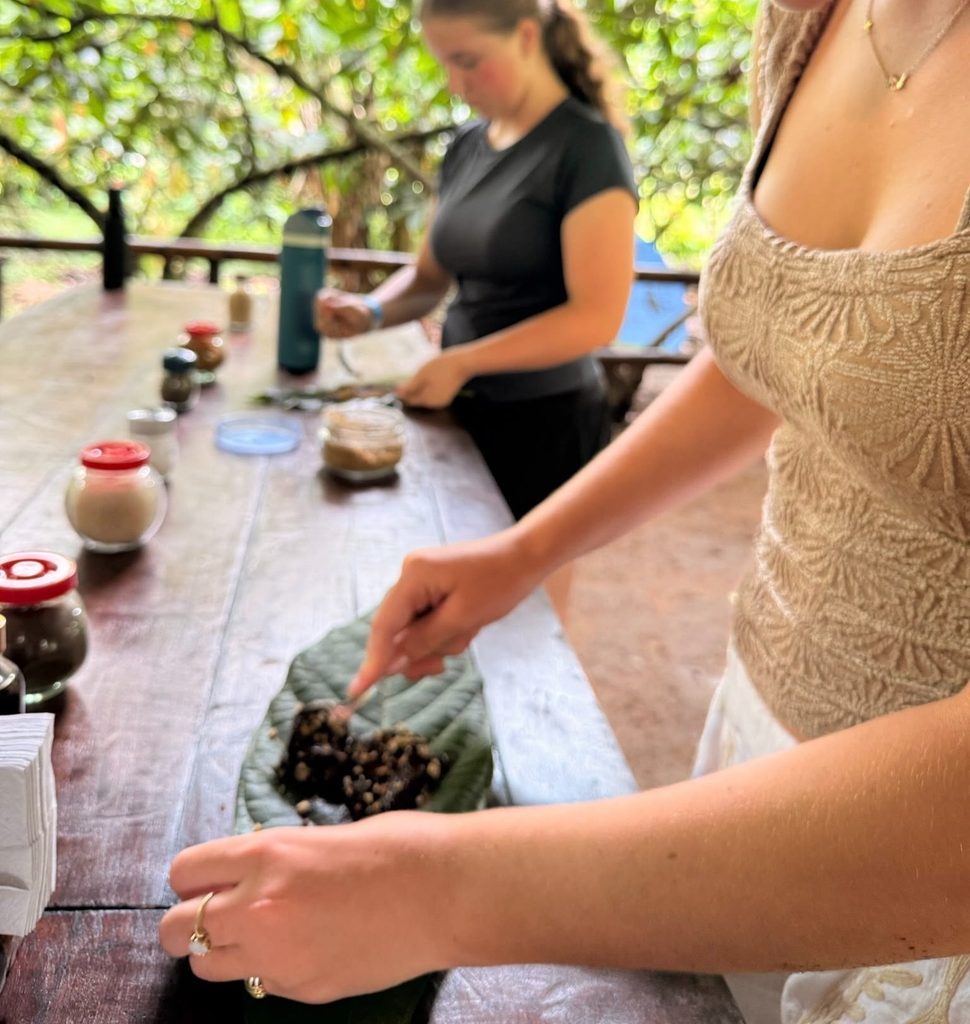
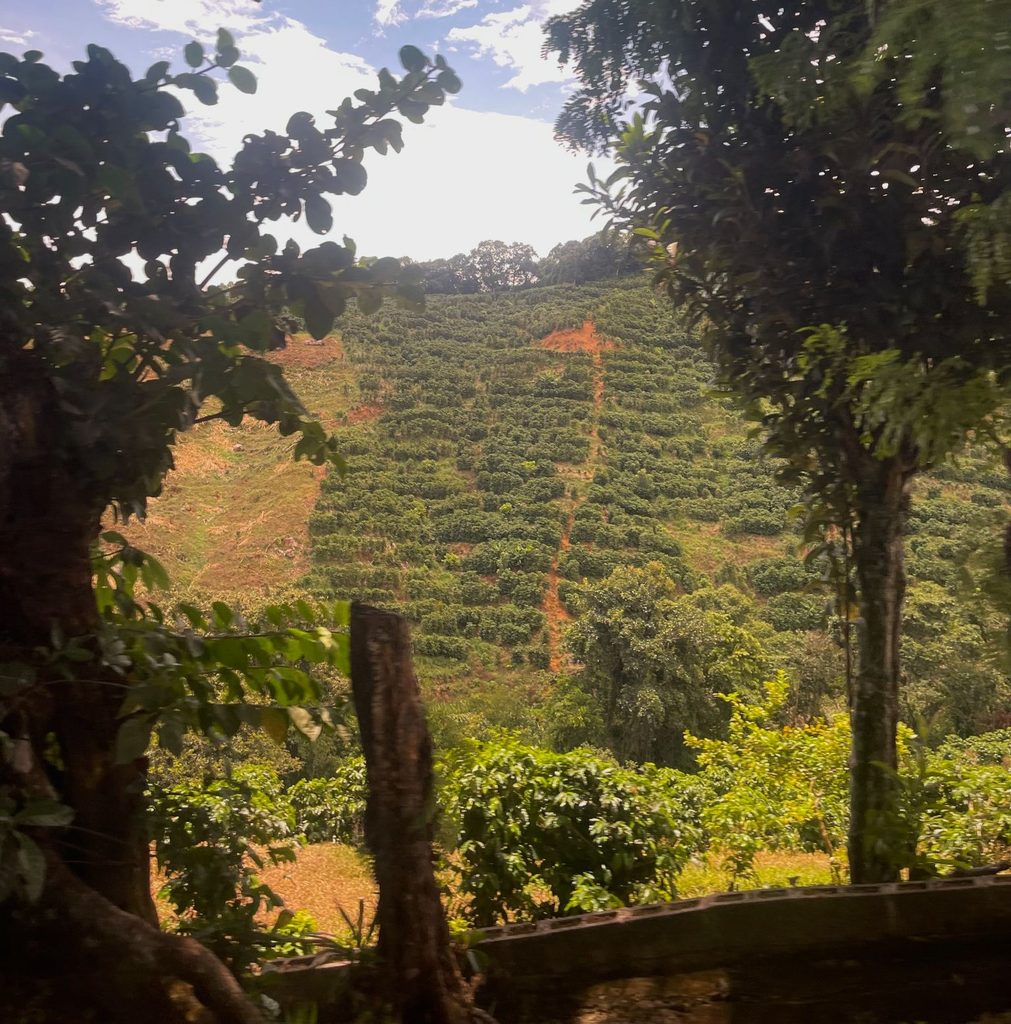
In the midst of the immense brain power and constant learning, I was always kept stimulated by the beautiful country surrounding me. We spent a day at the mall, which was incredibly glamorous—being a place still frequented by Costa Ricans for social hour, a custom we’ve mostly lost here in the United States. We toured coffee farms, which populate the mountainous countryside. We went ziplining, played soccer, watched the Copa Mundial alongside utterly enthusiastic ticos in the land of football. We went white-water rafting, were fed the freshest pineapple and watermelon, and toured downtown San José. One day we visited a chocolate farm where a rambunctious tour guide loved to play games with us through the breakdown in communication. A few of us brave enough to trust him, tasted a chile picante, a hot pepper, that left us sobbing and throats burning. We were told to rub an olive leaf on our necks and wrists to repel mosquitos. It was the wrong day to wear my hair up in a high bun, those of us with bare necks woke up the next morning with burns having replaced the oil residue. Unbeknownst to us, olive leaf oil has a property that intensifies UV rays. La crema de rosas, the “magic” moisturizing serum of Costa Rica, came to the rescue, with which I spent the rest of the trip nursing my second degree burns.
One of the moments I felt most immersed in Costa Rican culture was while visiting Montealto, a private school that spanned elementary through high school education. We spent the day socializing with the students our age, practicing our English or Spanish on each other, perhaps teaching each other the words they don’t in the language classrooms. We played soccer and volleyball and danced bachata. We listened to their music, them to ours. We laughed and shared stories. For a moment there was no linguistic barrier, no distance, no difference. We were just young people creating memories.
It is a human tendency to compare your life to what you witness. Yet comparison is the thief of happiness. Our insecurities can be our most fatal destroyer. The first impressions and the immediate friendships that blossom in these spaces can fill you up with love and serve as a reminder that your authentic self is what inspires.
At the dusk of each day I’d return to Casa de Rita, my host family. Patiently, my host mother would listen as I’d recount my day, and we’d prepare dinner on her stove. My host father would cut up maracuyas, passionfruit, caz, or pineapple to grind fresh into a refresco.
The evenings were calm; my housemates and I would visit neighboring homestays and watch from their porches as the dark sky fell on the dazzling city lights of San José. We’d let hours slip by as we connected over all the miles we’d traveled, on the spectacular chance that in all the time and distance between us, we’d converge in this beautiful place, and for it our lives would never be the same.
I arrived in Costa Rica with the intention to seek fluency in Spanish. I left with something less tangible yet more powerful: the courage to stumble through unfamiliar words, unfamiliar places, speak to unfamiliar faces, and embrace unfamiliar versions of myself. The moments that form us are the ones when we risk foolishness, when we get lost, when we’re imperfect. To say pura vida is not to ignore that life is full of impurity, nor to be blinded by the silver linings. I see it quite differently. A pure life is not untouched by hardship, it’s one where hardship is greeted with an open heart. It’s a reminder to feel the blow, absorb the lesson, then throw yourself back at life. It’s a reminder to be willing to love life when the going gets rough, to push past its punches. It reminds us to smile and forgive and move forward. Pura vida.
Be First to Comment